
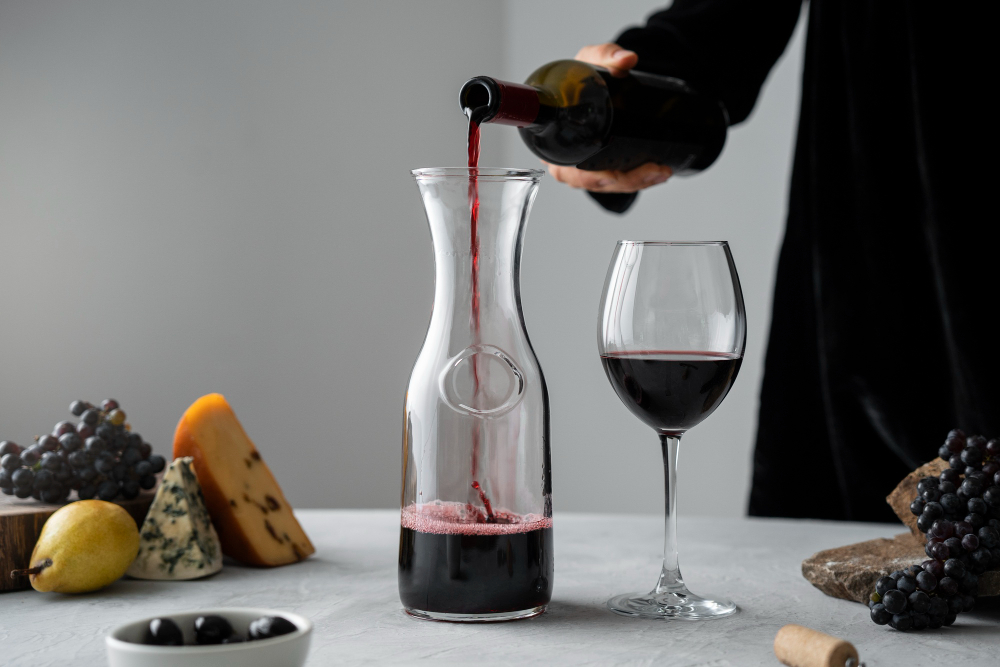
Wine is more than just a beverage; it is an experience that engages the senses and reflects centuries of culture and tradition. From the vineyard to the glass, every step matters in preserving and enhancing its taste. One accessory that often sparks curiosity among wine enthusiasts is the wine decanter.
Carry your wine in style with the premium Wine Carrier Case available at The Wine House. Designed for durability and elegance, it’s perfect for travel, picnics, or gifting. Whether you’re transporting 1 bottle or 6, this carrier ensures safety and sophistication. Shop now and elevate your wine experience.
Some see it as an elegant, decorative vessel, while others understand its deeper role in elevating the drinking experience. But what exactly does a decanter do, why should you use one, and when is it necessary? This article explores the answers in detail.
What Is a Wine Decanter?
A wine decanter is a glass or crystal vessel, traditionally with a wide base and narrow neck, used to serve wine. Its design is not just for aesthetics but also functionality. By pouring wine into a decanter, you expose it to oxygen, which helps unlock its aromas and flavors. Decanters come in various shapes and sizes, some modern and artistic, others simple and traditional. Regardless of design, their primary purpose remains the same—improving the wine-drinking experience.
The Role of Oxygen in Wine
To understand why decanting matters, it’s essential to consider the role of oxygen in wine. When wine is exposed to air, a process called oxidation occurs. This softens tannins, releases aromas, and can mellow harsh flavors. For young, bold red wines, oxygenation helps them open up, making them more enjoyable. However, too much exposure over time can spoil the wine, which is why decanting should be done shortly before serving. In short, a decanter offers controlled exposure to oxygen, striking the right balance between enhancement and preservation.
Why Use a Decanter?
The main reason to use a decanter is to enhance the taste and aroma of wine. Young red wines, often high in tannins, benefit the most from decanting. By softening their edges, a decanter makes the wine smoother and more approachable. Older wines, on the other hand, may have developed sediment during aging. Pouring them into a decanter allows the liquid to separate from these deposits, ensuring a cleaner pour and a more pleasant drinking experience. Additionally, decanters add a sense of ritual and sophistication to wine service, turning an ordinary evening into a refined affair.
When Should You Decant Wine?
Not every wine requires decanting, which is why timing and choice matter. Robust red wines such as Cabernet Sauvignon, Syrah, and Malbec often need it to reach their full potential. Decanting for thirty minutes to two hours can transform these wines. Older red wines, usually aged more than a decade, may also benefit, but primarily to separate sediment rather than aerate. In contrast, most white wines and lighter reds like Pinot Noir rarely require decanting, though some enthusiasts argue that a short exposure can still enhance their bouquet. Ultimately, decanting is a matter of both wine style and personal preference.
Decanting Young Wines
Young wines are often described as tight or closed, meaning their flavors and aromas are not immediately expressive. This is where decanters shine. By swirling a youthful Cabernet or Shiraz in a decanter, you speed up the aeration process that would naturally occur if the bottle were left open for hours. Within minutes, the wine softens, fruit notes become more pronounced, and the finish smoother. For wine lovers who enjoy bold styles, decanting is almost essential to experience the depth these wines can offer.
Decanting Aged Wines
Older wines require more delicate handling. While they may not need extended aeration, they often contain sediment—tiny particles of grape skins, yeast, or tannins that develop during aging. Sediment is harmless but unpleasant in texture and appearance. By slowly pouring the wine into a decanter and stopping before the sediment leaves the bottle, you can enjoy a clear, elegant glass. However, caution is important, as too much exposure to air can cause fragile old wines to lose their character quickly. In this case, decanting should be done immediately before drinking.
Preserve your wine’s flavor and freshness with high-quality Wine Bottle Stoppers from The Wine House. Stylish, durable, and leak-proof, these stoppers are perfect for home bars or gifting. Available in elegant designs to suit every bottle. Keep your wine fresh longer—shop now at The Wine House for premium stoppers.
The Aesthetic and Ritual of Decanting
Beyond its practical role, decanting is also a ritual that heightens the wine experience. Watching wine flow from bottle to glass vessel creates a sense of anticipation. The beauty of a crystal decanter sitting on a dining table adds elegance to gatherings, signaling that the wine is being treated with respect. For many, this ritual transforms a casual sip into a celebration, making decanting as much about atmosphere as taste.
Common Misconceptions About Decanting
One common misconception is that only expensive wines deserve decanting. In reality, even affordable wines can benefit. A modest bottle can taste richer and smoother after proper aeration. Another myth is that white wines should never be decanted. While most don’t need it, certain full-bodied whites like Chardonnay can open up with brief exposure to air. Some also believe decanting takes too long, but even ten minutes in a decanter can significantly improve a wine’s aroma. Understanding these misconceptions helps demystify the practice, making it accessible to all wine lovers.
Choosing the Right Decanter
The market offers a wide range of decanters, from simple carafes to sculptural masterpieces. While ornate designs can be beautiful, practicality is key. A decanter with a wide base is ideal for young wines, as it maximizes surface area for aeration. Narrower designs are better suited for older wines, reducing excess exposure. Ease of cleaning is also an important factor, as some elaborate designs are challenging to maintain. Ultimately, the best decanter is one that fits your lifestyle, enhances your enjoyment, and complements your wine-drinking rituals.
How Long Should You Decant?
The duration of decanting depends on the wine itself. Young reds may benefit from an hour or two, while lighter wines may need just fifteen minutes. For older wines, minimal exposure is best—pour and serve immediately. Tasting the wine during the process is the most reliable method. If the wine seems closed or harsh, let it sit longer. If it tastes lively and balanced, it’s ready. Decanting is both an art and a science, requiring observation and patience.
The Modern Perspective on Decanting
In today’s wine culture, decanting is seen not only as a traditional practice but also as a way to experiment. Some enthusiasts decant unconventional wines, including sparkling or rosé, to explore their potential. Others use aerators, modern devices that mimic decanting by exposing wine to air instantly as it pours. While tools evolve, the underlying principle remains unchanged—wine benefits from breathing. The growing interest in decanting reflects a broader appreciation for wine as an experience, not just a drink.
Conclusion
Wine decanters are more than elegant vessels; they are tools that unlock a wine’s full character. By enhancing aromas, softening tannins, and separating sediment, they elevate the drinking experience for both casual sippers and connoisseurs. Whether you’re enjoying a youthful red that needs time to open or an aged treasure requiring delicate handling, decanting ensures you savor the wine at its best. Beyond practicality, it adds ritual, beauty, and anticipation to the moment. Decanting may not be necessary for every bottle, but when used thoughtfully, it transforms wine from a simple drink into an extraordinary experience.