
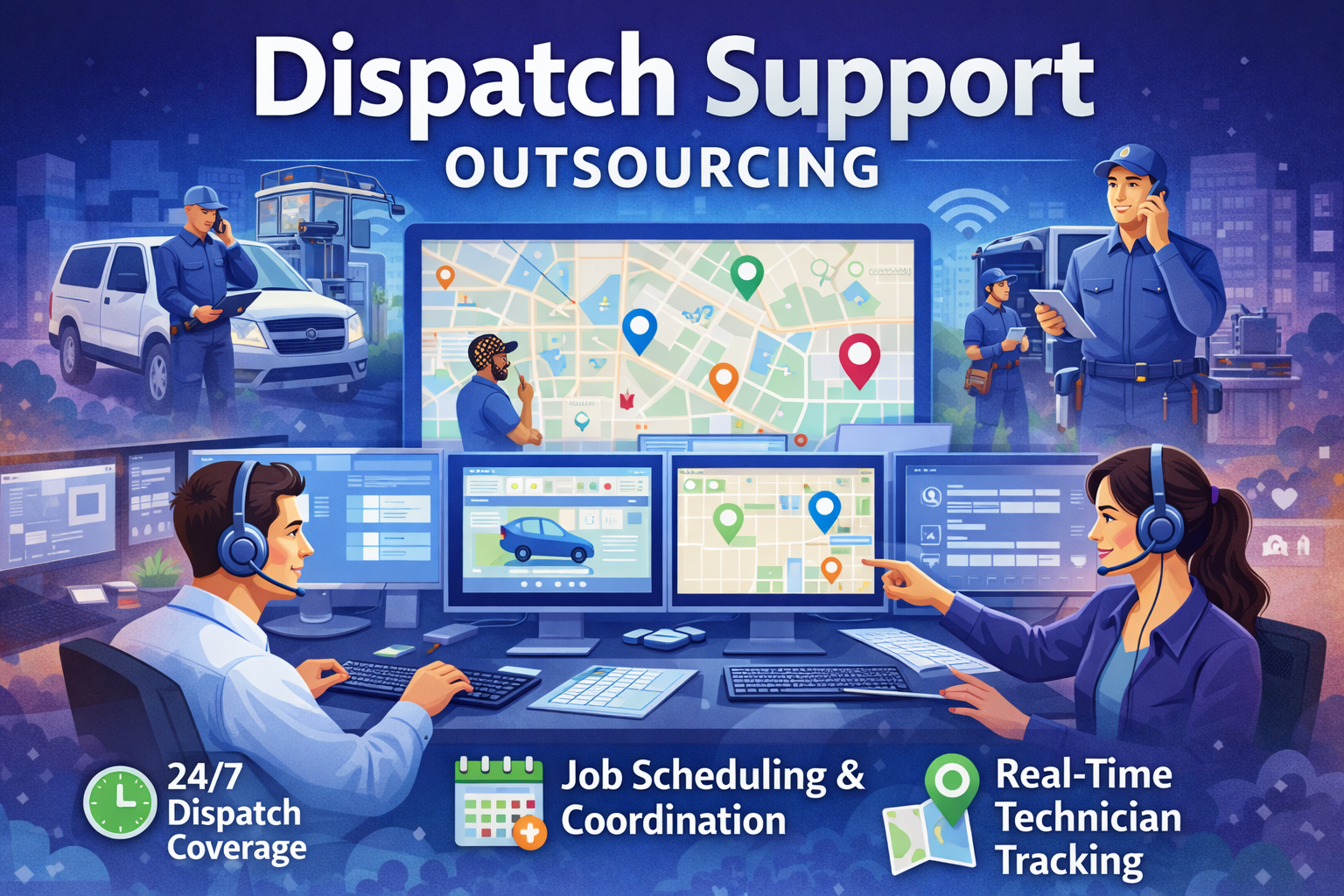
As businesses expand and customer expectations evolve, the efficiency of field service operations has become a key differentiator in competitive markets. Companies in telecommunications, utilities, IT services, and managed service providers (MSPs) rely heavily on dispatch teams to coordinate field technicians, ensure timely service delivery, and maintain high customer satisfaction. In 2026, more organizations are turning to dispatch support outsourcing to meet these demands, streamline operations, and stay ahead of the competition.
Dispatch operations are more complex than ever. Assigning field technicians to service calls, monitoring job progress, and ensuring tasks are completed on time requires sophisticated systems and experienced staff. Many businesses initially manage dispatch internally, but this approach often results in high costs, staffing challenges, and operational inefficiencies. Dispatch support outsourcing has emerged as a strategic solution, allowing companies to focus on growth while leaving the logistics of field service coordination to specialized providers.
The Growing Complexity of Field Service
Modern field service operations face multiple challenges. Customers expect fast responses and consistent service, which means dispatch teams need to operate around the clock. In-house dispatch teams often struggle to meet these demands due to limited staffing, especially outside of regular business hours. Seasonal spikes, emergency outages, and large-scale projects further strain internal resources.
Another key challenge is technology. Optimizing dispatch operations requires advanced software for job scheduling, GPS tracking, route optimization, and real-time monitoring. Many companies do not have the resources or expertise to implement these systems internally, which can lead to delayed responses, inefficient routing, and frustrated customers.
Dispatch support outsourcing addresses these challenges by providing access to trained professionals, advanced tools, and flexible, scalable services that can adapt to changing business needs.
Key Reasons Businesses Are Choosing Dispatch Support Outsourcing
24/7 Coverage
One of the most significant advantages of dispatch support outsourcing is the ability to provide round-the-clock coverage. Customers expect issues to be addressed quickly, regardless of the time of day. Outsourced dispatch teams ensure that service requests are logged, scheduled, and assigned immediately, even during nights, weekends, and holidays. This continuous coverage reduces downtime, improves service reliability, and enhances the overall customer experience.
Faster Response Times
Outsourced dispatch providers leverage real-time tracking, GPS-enabled routing, and intelligent scheduling systems to minimize delays. Technicians are dispatched efficiently, travel time is reduced, and field teams can handle more jobs per day. Faster response times translate into higher customer satisfaction, improved SLAs, and stronger brand reputation.
Scalability for Peak Demand
Businesses experience fluctuating demand throughout the year, whether due to seasonal activity, new service launches, or unexpected outages. Outsourced dispatch support allows companies to scale operations instantly without hiring additional staff or investing in new infrastructure. This flexibility ensures that service quality remains high, even during peak periods.
Access to Advanced Technology
Top dispatch support outsourcing providers utilize specialized platforms for scheduling, routing, monitoring, and reporting. Companies benefit from data-driven insights and predictive analytics without having to invest in expensive software or train internal staff. Technology integration also enables better coordination with CRM systems and field service management tools, providing a seamless workflow from ticket creation to resolution.
Focus on Core Business Functions
Managing dispatch internally can consume significant time and resources. Outsourcing allows companies to focus on strategic priorities such as product development, business growth, and customer experience. The dispatch provider handles the complexities of scheduling, coordination, and monitoring, ensuring that internal teams are free to concentrate on areas that drive revenue and innovation.
Industry Examples Driving the Trend
Telecommunications and broadband providers rely on quick resolution of outages and installations. Timely dispatch of technicians is essential to maintain service quality and prevent customer churn. Utilities and energy companies face similar challenges, often needing emergency dispatch of repair crews during outages or adverse weather conditions.
Managed service providers and IT companies must coordinate technicians across multiple client sites while meeting strict SLAs. Outsourced dispatch support ensures efficient scheduling and real-time updates, reducing the risk of delays. Field service companies in industries such as HVAC, plumbing, and industrial maintenance also benefit from outsourced dispatch, as it enables optimized routing, reduced idle time, and improved workforce productivity.
Benefits of Dispatch Support Outsourcing
Outsourcing dispatch operations provides tangible benefits across multiple business areas. Companies experience reduced operational costs, as they do not need to maintain a full in-house dispatch team. Service reliability improves through continuous monitoring and scheduling, ensuring that technicians are dispatched promptly and issues are resolved quickly.
Customer satisfaction increases due to faster response times, accurate scheduling, and better communication. Businesses also gain scalability, allowing them to handle fluctuating workloads without compromising service quality. Real-time dashboards and reporting tools provide enhanced visibility into operations, helping management make informed decisions and optimize field service performance.
Choosing the Right Dispatch Support Outsourcing Partner
Selecting a dispatch support partner requires careful consideration. Businesses should look for providers with experience across relevant industries, advanced technology capabilities, a proven track record of meeting service-level agreements, and refer to a detailed guide. Providers should offer 24/7 coverage, flexible workflows, and the ability to integrate with existing systems. Reviewing case studies, testimonials, and client references can help ensure the provider aligns with the company’s operational goals and customer expectations.
Conclusion
In 2026, businesses can no longer afford inefficiencies in field operations. Dispatch support outsourcing offers a strategic advantage by providing continuous coverage, faster response times, advanced technology, and scalable operations. Companies that invest in outsourced dispatch support can focus on growth, improve customer satisfaction, and maintain a competitive edge in an increasingly demanding market.
By leveraging dispatch support outsourcing, organizations ensure that their field operations are efficient, reliable, and responsive, allowing both customers and stakeholders to enjoy consistent, high-quality service.