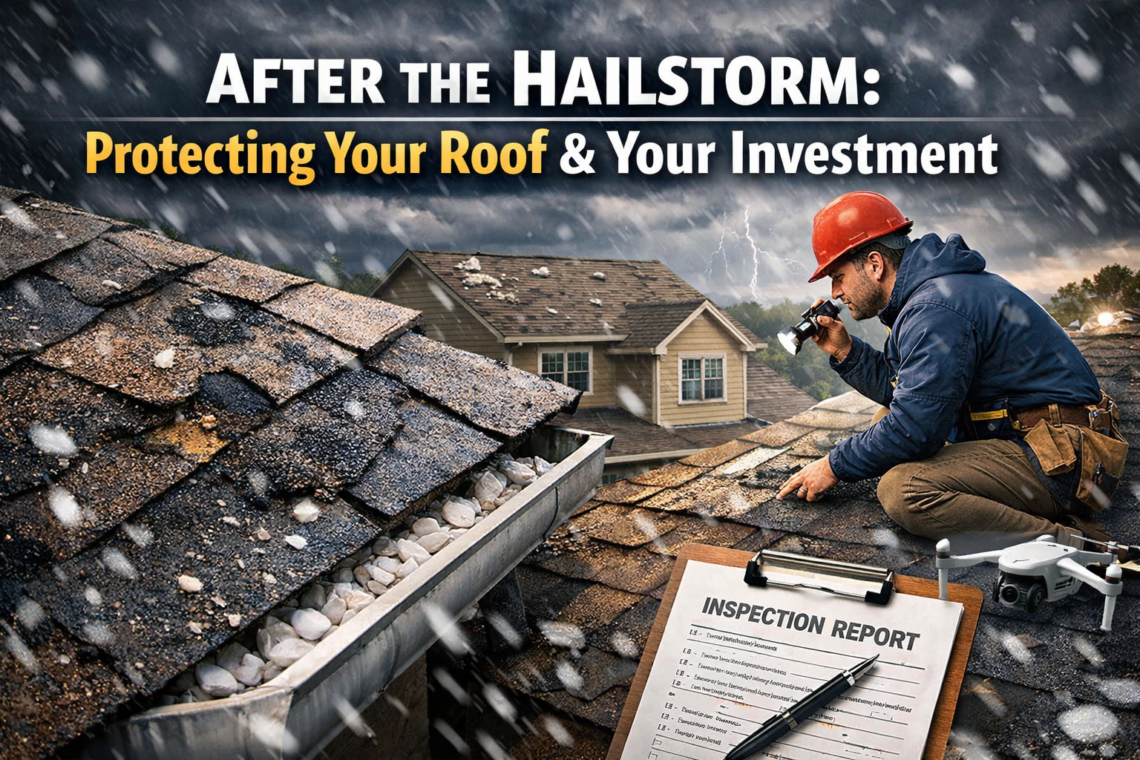
Hailstorms can strike quickly and leave homeowners dealing with hidden damage that may not be obvious at first glance. While broken windows or dented cars are easy to spot, roofing damage often goes unnoticed until it leads to leaks or structural issues. Understanding how hail affects your roof—and what steps to take afterward—can help protect your home and prevent costly repairs down the road.
In areas where storms are common, proactive roof inspections and timely repairs are essential to maintaining your home’s safety and value.
How Hailstorms Damage Roofing Systems
Hailstones vary in size, density, and impact force. Even relatively small hail can damage roofing materials depending on wind speed and storm intensity. When hail hits a roof, it can crack shingles, loosen granules, dent flashing, and weaken protective layers designed to keep moisture out.
Some of the most common forms of hail-related roof damage include:
-
Granule loss: Asphalt shingles are coated with granules that protect against UV rays and weathering. Hail impacts can knock these loose.
-
Cracked or bruised shingles: These weak points may not leak immediately but can deteriorate over time.
-
Damaged flashing and vents: Metal components on the roof are often dented or bent during storms.
-
Loosened shingles: High winds combined with hail can lift or tear roofing materials.
According to roofing professionals, many of these issues are difficult to detect from the ground. That’s why professional inspections are recommended after major storms.
Signs Your Roof May Have Hail Damage
Even if your roof looks fine from a distance, subtle clues around your property may indicate damage above. After a hailstorm, homeowners should look for the following warning signs:
1. Dented Gutters or Downspouts
Metal gutters and downspouts often show visible dents after hailstorms. If these areas are damaged, your roof may have experienced similar impacts.
2. Shingle Debris in Gutters
Granules from asphalt shingles frequently accumulate in gutters after hail events.
3. Damage to Outdoor Fixtures
If patio furniture, air conditioning units, or window screens show impact marks, the roof likely took a hit as well.
4. Water Stains Indoors
Ceiling spots or attic moisture can indicate that roof damage has already allowed water intrusion.
When these signs appear, scheduling a professional inspection quickly can prevent small issues from becoming larger structural problems.
Why Prompt Roof Inspections Matter
Many homeowners delay roof inspections after storms because everything appears normal. However, hail damage can weaken roofing materials long before leaks become visible.
Professional roofing contractors use specialized techniques and equipment to evaluate roofs accurately. For example, some companies now use drone-based inspections to identify impact damage, missing granules, and compromised materials without causing further disturbance to the roof.
A thorough inspection typically includes:
-
Checking shingles for impact marks and bruising
-
Examining flashing, vents, and skylights
-
Assessing gutters and drainage systems
-
Evaluating attic ventilation and insulation
-
Documenting damage for insurance purposes
Early detection allows homeowners to address repairs before moisture infiltrates the home’s structure.
Understanding Insurance and Storm Damage Claims
One of the most confusing aspects of hail damage is dealing with insurance claims. Many homeowners are unsure whether their policy covers roof damage or how the process works.
In most cases, homeowners insurance policies cover storm-related damage, including hail impacts. However, approval often depends on proper documentation and verification that the damage occurred during a covered event.
Here are a few helpful steps when filing a claim:
-
Document visible damage with photos after the storm.
-
Schedule a professional inspection to confirm the extent of the damage.
-
Contact your insurance provider to initiate the claim.
-
Keep all inspection and repair records for your claim file.
Experienced contractors often assist homeowners by providing inspection reports and helping communicate with insurance adjusters.
Repair vs. Replacement: What Determines the Right Solution?
After an inspection, roofing professionals determine whether repairs or a full replacement is necessary. This decision depends on several factors, including:
-
The age of the roof
-
The severity and spread of damage
-
The type of roofing material
-
Insurance coverage considerations
Minor damage may only require replacing a few shingles or repairing flashing. However, widespread hail impacts may compromise the entire roofing system, making replacement the safer long-term solution.
The key goal is restoring the roof’s protective barrier so that water, wind, and temperature changes cannot damage the underlying structure.
Choosing a Qualified Roofing Contractor
After a major storm, many contractors appear offering quick repairs. While some are reputable, others may be temporary “storm chasers” who move from area to area after severe weather.
To protect your home and your investment, homeowners should look for contractors who:
-
Are licensed and insured
-
Have established local experience
-
Offer written warranties
-
Provide clear inspection reports and estimates
Trusted companies often have extensive installation experience and industry certifications. Some contractors, for example, hold specialized manufacturer certifications awarded to only a small percentage of roofing companies nationwide.
Working with a reputable roofing professional ensures repairs are performed correctly and backed by reliable warranties.
Protecting Your Home After the Storm
Hailstorms are unpredictable, but the damage they cause doesn’t have to become a long-term problem. With timely inspections, clear documentation, and experienced contractors, homeowners can restore their roofs and protect their property for years to come.
If you suspect your roof may have been affected by a recent storm, learning more about professional inspection and restoration options can be a valuable first step. Homeowners seeking guidance on the process can explore resources on Peachtree City hail damage roof repair to better understand how inspections, insurance coordination, and restoration services typically work.