
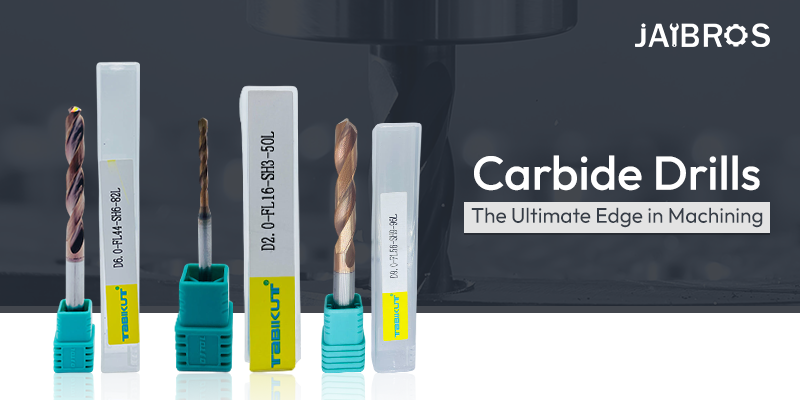
Avoid costly errors when using Carbide Drills in CNC machines. Learn key mistakes, tips for tool life, better accuracy, and correct use of carbide drill bits.
How to Prevent Costly Errors While Working With Carbide Drills in CNC Machines
In modern machining, precision, speed, and tool life matter more than ever. That’s why a Carbide Drill has become a preferred choice for manufacturers who want clean holes, faster cycle times, and consistent results. Made from hard tungsten carbide material, these drills offer incredible rigidity and heat resistance—perfect for high-speed cutting.
But even with all these advantages, many machinists unknowingly make mistakes that reduce tool life, cause tool breakage, or compromise surface finish. In this guest post, we will explore the top mistakes to avoid when using Carbide Drills in CNC machines and how proper technique can extend tool life and improve machining efficiency.
1. Using the Wrong Carbide Drill for the Material
One of the most common issues operators face is selecting the incorrect drill geometry or grade for the workpiece material. A Carbide Drill designed for aluminum behaves differently than one designed for stainless steel or hardened alloys.
What can go wrong?
- Poor chip evacuation
- Excessive heat buildup
- Chipping at the cutting edge
- Premature tool failure
How to avoid it
- Choose the correct point angle for the material.
- Use a coated carbide drill bit for harder alloys.
- For deep-hole drilling, go for coolant-through carbide bits to prevent jamming.
Proper selection ensures stability, longer tool life, and a consistent hole finish.
2. Incorrect Feeds and Speeds Settings
Even the most advanced CNC tool can’t compensate for incorrect cutting parameters. Carbide tools behave differently from HSS tools—they require higher speeds but controlled feed rates.
Common effects of wrong parameters
- Too slow = rubbing, heat, micro-cracks
- Too fast = chipping or catastrophic breakage
- Too low feed = burnishing instead of cutting
- Too high feed = tool overload
Best practice
- Always refer to the manufacturer’s recommended speed and feed chart.
- Adjust parameters based on material hardness, depth, and coolant flow.
- Use high RPM and precise feed when drilling with carbide bits.
Correct settings not only protect your Carbide Drill but also improve machining efficiency.
3. Neglecting Coolant or Using the Wrong Coolant Type
Heat is the biggest enemy during carbide drilling. Without proper coolant flow, even the best Carbide Drill can fail quickly. Overheated chips can weld to the tool, creating immense friction.
Issues caused by poor coolant
- Rapid tool wear
- Built-up edge formation
- Chip welding
- Hole inaccuracy
Solutions
- Use coolant-through drills for deeper holes.
- Maintain optimum coolant pressure and flow rate.
- Ensure the coolant type is compatible with the material.
Proper coolant management significantly enhances tool performance and durability.
4. Incorrect Workpiece Clamping and Machine Setup
If the workpiece is not firmly clamped, even a rigid carbide drill bit will experience deflection. This results in oversized holes, poor alignment, and tool breakage.
Symptoms of poor clamping
- Vibration marks
- Uneven cutting
- Broken edges on the Carbide Drill
Preventive steps
- Ensure solid and stable work-holding.
- Avoid long tool overhangs.
- Use the shortest possible drill length for accuracy.
Good stability prevents unnecessary tool stress and promotes cleaner drilling.
5. Skipping Proper Pre-Drilling or Spot Drilling
Carbide drills are rigid and sharp, but they still need proper entry alignment. When drilling hard metals or angled surfaces, skipping a spot drill can cause the drill to walk or chip.
Consequences
- Misaligned holes
- Broken cutting edges
- Inconsistent tolerances
Avoid this mistake
- Use a carbide spotting tool for precision.
- For deep or angled surfaces, use guided entry techniques.
A small amount of preparation eliminates costly tool damage.
6. Poor Chip Evacuation Practices
Carbide drills work best when chips flow smoothly through the flutes. If chips accumulate, they create pressure and heat that damage the tool.
What chip problems cause
- Flute blockage
- Sudden breakage
- Poor hole finish
- Thermal cracking
How to improve chip evacuation
- Use proper coolant-through drills.
- Increase feed rate in deep holes to break chips.
- Use peck drilling cycles only when necessary—excessive pecking can harm the tool.
Efficient chip control increases productivity and enhances tool life.
7. Using Dull or Poor-Quality Carbide Bits
Even high-quality carbide tools wear out over time. Many machinists continue using a dull carbide drill bit or even substitute low-cost tools that lack consistency.
Problems with dull tools
- Increased heat
- Oversized holes
- Poor surface quality
- Higher spindle loads
Avoid this mistake by
- Inspecting tools regularly.
- Replacing worn tools before failure.
- Investing in reliable carbide bits from trusted manufacturers.
High-quality tools lead to more accurate parts and lower long-term costs.
8. Ignoring Tool Holders and Machine Condition
Many users focus only on the Carbide Drill and forget the importance of tool holders, collets, and machine condition.
Impact of poor tool holding
- Increased runout
- Vibration
- Tool chipping
- Inconsistent hole depth
Best practices
- Use precision tool holders.
- Check runout at the spindle and tool.
- Maintain the CNC machine spindle regularly.
A stable setup ensures the Carbide Drill performs at its best.
9. Not Understanding the Difference Between Carbide Drills & Carbide End Mills
Machinists often confuse drilling and milling tools. A carbide end mill is designed for side cutting and slotting, while a Carbide Drill is designed specifically for axial drilling.
Using the wrong tool for the wrong job leads to:
- Tool breakage
- Poor surface finish
- Misaligned geometry
Always use end mills for milling and carbide drills for drilling to maintain machining integrity.
Conclusion
A Carbide Drill is one of the most powerful tools in a machinist’s arsenal—capable of delivering unmatched precision and speed. But to fully benefit from its strength, it’s essential to avoid common mistakes that affect performance, tool life, and machining accuracy.
By choosing the right tool, using correct cutting parameters, ensuring proper coolant flow, maintaining the CNC machine, and understanding tool limitations, you can extend the life of your carbide drill and achieve superior machining results every time.
FAQS
- What is a Carbide Drill?
A hard, heat-resistant drill used in CNC machines for fast and precise hole making.
- Why do Carbide Drills break?
Mainly due to wrong speeds, poor coolant, vibration, or chip blockage.
- How do I increase Carbide Drill life?
Use correct parameters, good coolant flow, and stable work-holding.
- Can Carbide Drills cut hard metals?
Yes, they work well on stainless steel, titanium, and hardened alloys.
- What’s the difference between a carbide drill bit and a carbide end mill?
Drill bits are for hole making; end mills are for side cutting and profiling.