
Last week, I watched a startup announce their breakthrough product to 50,000 simultaneous viewers across six continents. Not a single frame dropped. Not one viewer complained about buffering.
Five years ago, this would have required a television network. Today, it’s just Tuesday.
But here’s what fascinates me: while everyone talks about content creation and audience growth, almost nobody discusses the invisible network architecture that makes modern streaming possible. The truth is, your broadcast is only as strong as the infrastructure delivering it.
Let me pull back the curtain on what’s really happening when millions watch the same moment unfold in perfect synchronization.
The Hidden Complexity Behind “Just Hit Play”
When viewers click play, they expect instant gratification. What they don’t see is the sophisticated orchestration happening across global networks.
A professional network stream player online isn’t just software—it’s a gateway to an entire ecosystem. The moment someone starts watching, the player communicates with edge servers, negotiates optimal routing paths, and establishes multiple fallback connections. All of this happens in milliseconds.
Think of it like air traffic control for video data. Every packet of information needs to find the fastest route from source to screen. The player manages this journey, constantly adjusting for network congestion, server loads, and geographical distances.
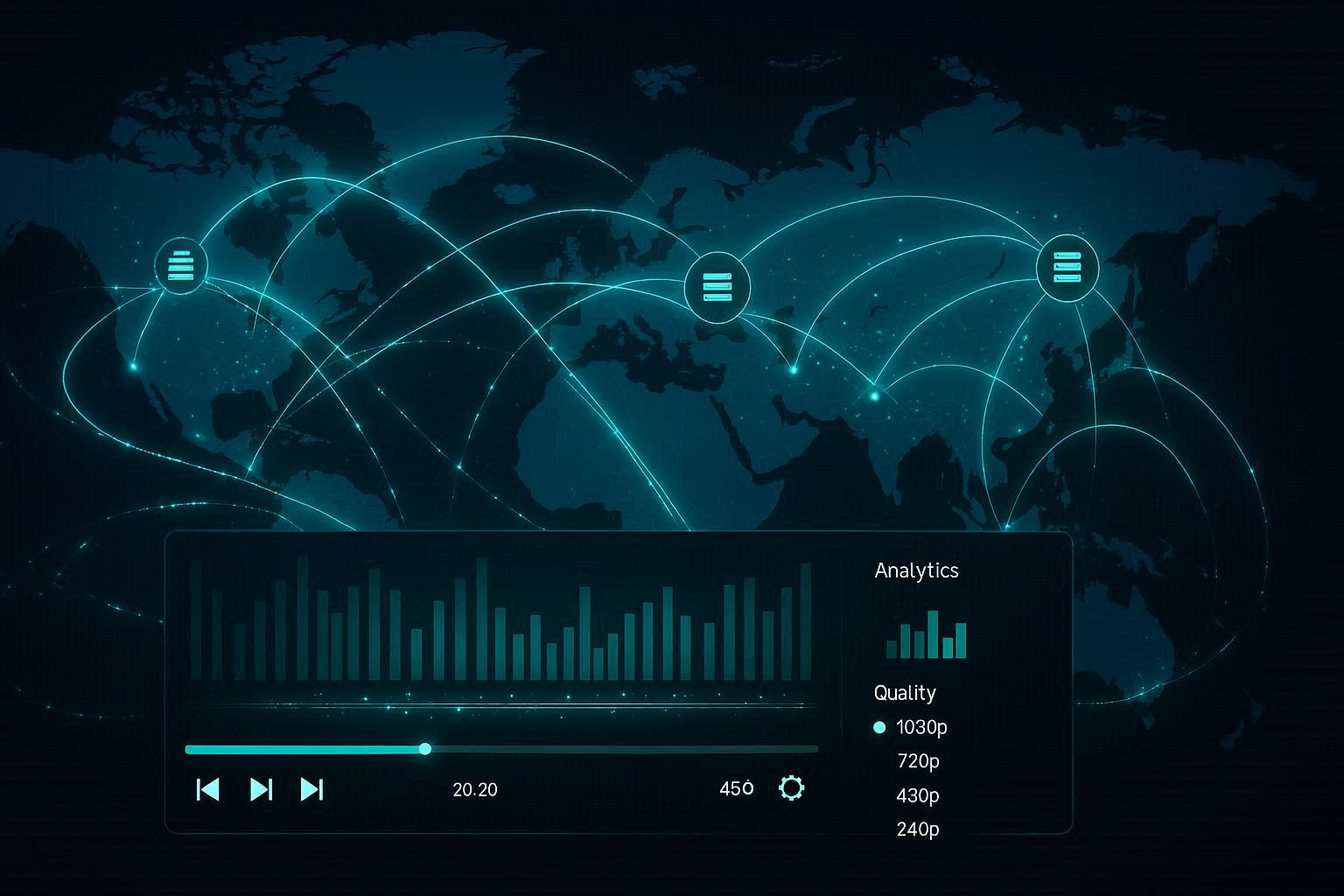
Modern players leverage content delivery networks (CDNs) with thousands of edge servers worldwide. When someone in Tokyo watches your broadcast, they’re not pulling data from your origin server in New York. They’re connecting to a local server that’s already cached and optimized your content. The player intelligently selects the best source based on real-time network conditions.
Why Traditional Streaming Fails at Scale
Here’s a scenario that plays out daily: A company invests thousands in production quality. They hire professional cameras, perfect their lighting, and rehearse every moment. Then they stream through a basic player that can’t handle the load.
The result? Viewers experience stuttering video, audio sync issues, and eventually, the dreaded connection timeout. By the time technical support scrambles to fix it, the audience has vanished.
The problem isn’t bandwidth—it’s architecture. Consumer-grade streaming solutions rely on single-point connections. When traffic spikes, these systems crumble. Professional network players distribute the load across multiple pathways, ensuring no single point of failure can derail your broadcast.
The Technology Powering Today’s Virtual Experiences
The explosion in live event streaming demands infrastructure that can scale instantly. Whether it’s a corporate town hall, a music festival, or a product launch, the technical requirements are staggering.
Consider what modern streaming infrastructure handles simultaneously:
- Ingesting video at multiple bitrates
- Transcoding for different devices and connections
- Distributing through geographic load balancing
- Managing authentication and access control
- Processing real-time analytics
- Enabling interactive features like polls and chat
Each element must work flawlessly while appearing effortless to the viewer.
Building for Reliability in an Unreliable World
The internet wasn’t designed for live video. It was built for resilient data transfer, where packets could take different routes and arrive out of order. Streaming requires something entirely different: consistent, ordered delivery with minimal latency.
Professional players solve this through adaptive bitrate streaming. They encode multiple quality versions simultaneously—4K, 1080p, 720p, 480p—and seamlessly switch between them based on network conditions. When a viewer’s connection weakens, the player instantly drops to a lower quality to maintain playback. When it improves, quality increases automatically.
But here’s where it gets sophisticated: modern players predict these changes before they happen. By monitoring buffer health, download speeds, and network jitter, they anticipate problems and adjust proactively. Viewers never know their connection wavered.
The Competitive Edge Hidden in Your Infrastructure
As we move through 2026, the companies winning at digital engagement aren’t necessarily those with the best content. They’re the ones whose content actually reaches their audience reliably.
Network-optimized players provide advantages most businesses don’t realize exist:
Geographic Intelligence
Players with integrated CDN management automatically route viewers to the nearest server, reducing latency and improving quality. This means your viewer in Singapore gets the same experience as someone in San Francisco.
Bandwidth Optimization
Smart players use advanced compression algorithms that reduce data usage without sacrificing quality. This matters enormously in mobile-first markets where data costs impact viewing decisions.
Security at Scale
Professional streaming infrastructure includes DRM protection, token authentication, and encrypted delivery—essential for premium content and private corporate communications.
Making the Investment That Actually Matters
Here’s my advice for anyone serious about streaming in 2026: stop obsessing over cameras and start thinking about infrastructure.
The best content in the world means nothing if viewers can’t watch it. A robust network player isn’t just a technical requirement—it’s your connection to your audience. It determines whether your message reaches thousands or gets lost in loading screens.
The future belongs to those who understand that streaming isn’t just about going live. It’s about staying live, scaling instantly, and delivering experiences that viewers remember for the content, not the technical difficulties.
Choose your infrastructure wisely. Your audience depends on it.
Related Post – How Online Game Streaming Became Science’s Behavioral Laboratory