
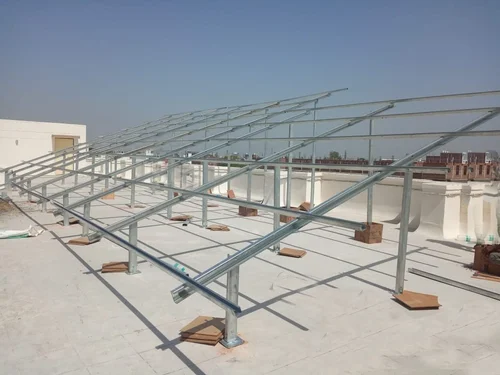
The demand for renewable energy has increased significantly in recent years due to environmental concerns, rising energy costs, and the push for sustainable development. Among various renewable energy solutions, solar energy stands out as one of the most efficient and accessible sources of clean energy. The efficiency and longevity of a solar power system depend heavily on the quality of its supporting structures, which are responsible for securely mounting the solar panels. This article delves into the manufacturing and installation of solar panel structures within the scope of power electro-mechanical engineering.
Introduction to Solar Panel Structure
Solar panel structures, also known as mounting systems or racking systems, play a crucial role in the performance of solar power installations. These structures are engineered to provide stability, durability, and flexibility for solar panels in different environmental conditions. They are designed to withstand wind, snow loads, and other external forces while keeping the panels at an optimal angle to maximize solar energy absorption.
From a power electro-mechanical engineering perspective, these structures must integrate both mechanical robustness and electrical safety. Proper design ensures that electrical grounding is facilitated, minimizing the risk of short circuits and ensuring the longevity of the solar panels.
Types of Solar Panel Structures
Solar panel mounting systems can be broadly categorized into two types:
1. Fixed Solar Panel Structures
Fixed structures are stationary and designed to hold solar panels at a predetermined angle. These systems are widely used in residential, commercial, and utility-scale solar installations. Advantages of fixed structures include simplicity, low cost, and minimal maintenance. However, they do not follow the sun’s path, which can reduce energy efficiency compared to tracking systems.
2. Solar Tracking Structures
Tracking systems allow solar panels to follow the sun’s movement throughout the day. These systems are classified into two main types:
-
Single-Axis Trackers: Rotate panels along one axis, usually east to west, to follow the sun.
-
Dual-Axis Trackers: Rotate panels along both horizontal and vertical axes, optimizing energy capture throughout the year.
Tracking systems increase energy production by up to 25-35% compared to fixed structures but require higher initial investment and regular maintenance.
Materials Used in Solar Panel Structures
The choice of materials in manufacturing solar panel structures is critical for ensuring durability, corrosion resistance, and structural integrity. Common materials include:
-
Galvanized Steel: Offers high strength and corrosion resistance, ideal for large-scale and industrial installations.
-
Aluminum: Lightweight, corrosion-resistant, and easy to fabricate, suitable for rooftop installations.
-
Stainless Steel: Provides excellent corrosion resistance and long-term durability but comes at a higher cost.
-
Composite Materials: Used in specialized applications where lightweight and resistance to extreme environments are required.
Power electro-mechanical engineers must select materials considering environmental conditions, load requirements, and cost-effectiveness.
Design Considerations in Solar Panel Structures
The design of solar mounting structures involves several engineering considerations:
-
Load-Bearing Capacity: Structures must withstand wind loads, snow loads, seismic activity, and other environmental factors.
-
Tilt Angle and Orientation: Optimizing the angle and orientation of panels is crucial for maximum energy capture.
-
Electrical Grounding: Proper grounding prevents electrical hazards and protects the system from lightning strikes.
-
Thermal Expansion: Structures must accommodate expansion and contraction due to temperature fluctuations.
-
Ease of Installation and Maintenance: Efficient design reduces labor costs and facilitates maintenance activities.
Advanced software tools, such as AutoCAD, SolidWorks, and PVsyst, are often used for designing solar structures with precision.
Manufacturing Process of Solar Panel Structures
The manufacturing process for solar panel structures involves several stages:
1. Material Preparation
Raw materials such as steel or aluminum are cut, drilled, and shaped according to the design specifications.
2. Fabrication
Fabrication includes welding, bolting, or riveting components to form the structural framework. Galvanizing or coating may be applied to enhance corrosion resistance.
3. Quality Control
Engineers perform rigorous quality inspections, including dimensional checks, load testing, and corrosion resistance assessments, to ensure compliance with international standards.
4. Surface Treatment
Surface treatments, including powder coating or anodizing, are applied to prevent corrosion and enhance the aesthetic appeal of the structure.
5. Packaging and Transportation
Finished structures are carefully packaged to avoid damage during transportation to the installation site.
Installation of Solar Panel Structures
The installation process involves several steps, each critical to the system’s performance:
1. Site Survey
A comprehensive site survey evaluates soil type, topography, wind conditions, shading, and solar exposure.
2. Foundation Construction
Depending on the type of installation (roof-mounted or ground-mounted), foundations are constructed using concrete, screw piles, or ballast systems.
3. Mounting Structure Assembly
Pre-fabricated components are assembled on-site. Precision alignment ensures the correct tilt and orientation for optimal energy capture.
4. Panel Installation
Solar panels are mounted on the structure and securely fastened. Electrical connections are made in compliance with safety standards.
5. System Testing
Final testing involves checking structural stability, electrical continuity, grounding, and system performance to ensure safe and efficient operation.
Challenges in Solar Panel Structure Engineering
While designing and installing solar structures, engineers face several challenges:
-
Environmental Conditions: Structures must withstand extreme weather, including high winds, heavy snow, and seismic activity.
-
Material Durability: Corrosion and wear can compromise system integrity.
-
Cost Management: Balancing cost, performance, and durability is critical.
-
Regulatory Compliance: Systems must meet local building codes and electrical safety standards.
-
Installation Complexity: Large-scale installations require careful logistics and skilled labor.
Overcoming these challenges requires collaboration between mechanical engineers, structural engineers, and electrical engineers.
Innovations in Solar Structure Engineering
Advancements in technology continue to improve solar mounting systems:
-
Lightweight Materials: Reducing weight while maintaining strength minimizes installation costs and load on rooftops.
-
Integrated Solar Tracking: Smart tracking systems increase efficiency by dynamically adjusting to sunlight.
-
Modular Design: Modular systems simplify installation, maintenance, and scalability.
-
BIPV (Building-Integrated Photovoltaics): Solar panels integrated directly into building materials, such as facades and roofs, reducing the need for separate structures.
These innovations contribute to higher energy yields, lower costs, and more aesthetically pleasing installations.
Conclusion
Solar panel structures are the backbone of any solar power system. Proper design, high-quality materials, precise manufacturing, and professional installation are essential to ensure durability, safety, and maximum energy efficiency. Power electro mechanical engineering play a pivotal role in integrating mechanical robustness with electrical safety, ensuring that solar installations are reliable and sustainable for decades.
As solar energy continues to grow globally, advancements in structure design and installation practices will be crucial in making renewable energy more accessible, efficient, and environmentally friendly.