
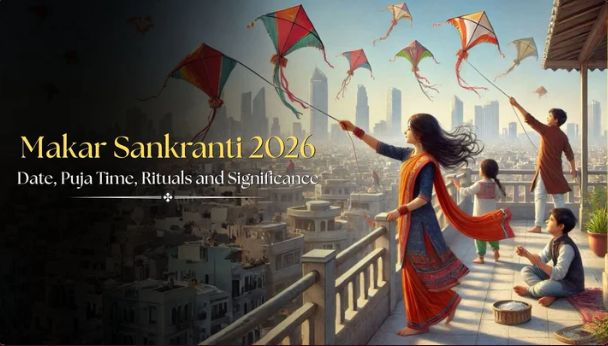
Makar Sankranti is one of the most ancient and widely celebrated Hindu festivals in India, signifying not just a religious observance but also a deep connection with nature, harvest, and cosmic rhythms. It marks a transition of the Sun into the zodiac sign of Capricorn (Makar), symbolizing the end of winter’s darkness and the beginning of longer, brighter days ahead. This festival is celebrated with great zeal across the country every year, bringing communities together in joy, gratitude, and festive spirit.
Makar Sankranti 2026: Date & Shubh Muhurat
In 2026, Makar Sankranti falls on 14 January — a date that remains consistent with its celebration across the length and breadth of India, rooted in the solar calendar rather than the lunar one.
Here are the key timings for the festival in 2026:
Event — — — — — Date / Time (IST)
Festival Date — 14 January 2026
Sankranti Moment — 03:13 PM
Punya Kaal — 03:13 PM to 05:45 PM
Maha Punya Kaal — 03:13 PM to 04:58 PM
These timings are especially important for those who wish to perform rituals at the most auspicious moments. While the exact Muhurat may slightly vary by region or panchang (Hindu calendar), the festival itself is celebrated nationwide on this date.
Why Makar Sankranti Is Celebrated: Spiritual & Cultural Significance
1. The Sun’s Transition and the Dawn of Positivity
Makar Sankranti marks the day when the Sun enters Capricorn (Makar Rashi) from Sagittarius, heralding its northward journey known as Uttarayan. This celestial shift carries immense spiritual and astrological significance. It is believed to usher in a period of increased light, clarity, and spiritual energy — making it an ideal time for new beginnings, introspection, and growth.
In Hindu tradition, the northward movement of the Sun symbolizes victory over darkness and ignorance, highlighting hope, warmth, and rejuvenation. The festival is also deeply connected with India’s agrarian roots, as it aligns with the harvest season and offers a moment for farmers and families to express gratitude for nature’s abundance.
Rituals and Traditions of Makar Sankranti
Makar Sankranti is rich not only in its spiritual meaning but also in its traditional practices, many of which have been handed down through generations.
1. Early Morning Ritual Bath
Devotees start the day with a ritual bath early in the morning, often in sacred rivers like the Ganges, Yamuna, or other holy waterways. This act is believed to purify the body and soul, washing away past sins and paving the way for spiritual renewal.
2. Offering Arghya to Surya (The Sun God)
In the afternoon, close to the Sankranti moment or during the Punya Kaal, worshippers offer Arghya — water mixed with sesame seeds, flowers, and sometimes jaggery — to the Sun while facing it. This gesture expresses gratitude to Surya, the source of life and energy.
3. Charity and Daan (Giving)
Charity is a pivotal aspect of the festival. On Makar Sankranti, donating sesame seeds (til), jaggery (gur), blankets, grains, and other essentials to the needy is considered highly auspicious and meritorious. This act of giving not only helps the less fortunate but also symbolizes the sharing of prosperity and warmth.
4. Sharing Festive Foods
Culinary traditions play a cherished role in Makar Sankranti celebrations:
- Til and Gur Sweets: Tilgul, til ladoo, gajak, and til chikki are common festive sweets made from sesame seeds and jaggery — ingredients that provide warmth and strength during winter.
- Khichdi & Regional Delicacies: In many regions, khichdi (a wholesome mix of rice and lentils) is prepared and shared, symbolizing unity, simplicity, and nourishment.
- Pongal: In Tamil Nadu, the festival is celebrated as Pongal, featuring a special dish of the same name made from newly harvested rice boiled in milk and jaggery.
Regional Flavors of Celebration
Makar Sankranti is celebrated in diverse ways across India — each region adding its unique cultural touch:
Uttarayan in Gujarat
In Gujarat, the festival is synonymous with kite flying. The skies fill with colorful kites, producing a vibrant and festive atmosphere as families and friends compete in friendly battles of flying prowess.
Pongal in the South
In Tamil Nadu, Makar Sankranti evolves into a four-day festival called Pongal, celebrating the harvest with rituals dedicated to the Sun God and cattle.
Magh Bihu in Assam
In Assam, the festival aligns with Magh Bihu, a harvest celebration that includes feasts, bonfires, and traditional dance and dance forms.
Khichdi Parv in North India
In parts of northern India like Uttar Pradesh and Bihar, Khichdi Parv sees families offering and sharing khichdi with loved ones, emphasizing hospitality and nourishment.
Social and Cultural Significance
Makar Sankranti exemplifies not just a religious observance but also social harmony and cultural unity. It brings families and communities together, reinforces traditional values, and celebrates gratitude towards nature and the universe. The spirit of sharing — be it sweets, food, or charity — reflects the essence of human connection and mutual support.
Across centuries, this festival has embedded itself into the cultural fabric of Indian life — linking ancient astronomical wisdom with everyday life and social traditions. Whether it’s the thrill of kite flying, the warmth of sesame sweets, or the serenity of river bathing, Makar Sankranti unifies celebration with spirituality and seasonal change.
Conclusion
Makar Sankranti is far more than a date on the calendar: it is a symbol of hope, renewal, and celebration. In 2026, as the Sun journeys into Capricorn on 14 January, millions of devotees will observe age-old traditions, express gratitude for life’s blessings, and welcome the promise of brighter days ahead.
From auspicious Shubh Muhurat timings to regional festivals filled with food, color, and joy, Makar Sankranti beautifully illustrates India’s rich cultural diversity and spiritual heritage. Whether through prayers at sunrise, sharing sesame sweets, or flying kites against winter skies, the festival invites all to embrace life with enthusiasm and harmony.
Refrence Visit Site: https://kinkedpress.com/