
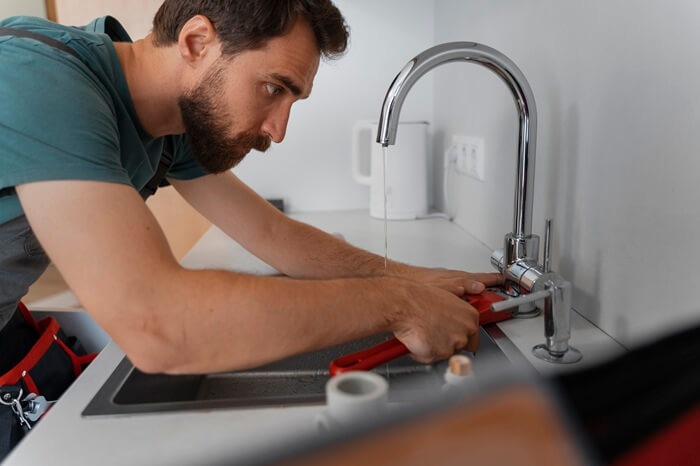
A kitchen faucet sprayer is one of the most convenient tools in any modern kitchen. It helps with rinsing dishes, cleaning vegetables, and washing down the sink quickly. So when the sprayer suddenly stops working, leaks, or loses pressure, it can be frustrating and disruptive to daily routines.
Fortunately, many sprayer issues are caused by common problems that homeowners often try to fix themselves before calling a professional. Understanding these issues can help you decide whether a quick DIY solution is enough or if expert kitchen faucet repair is needed.
This guide walks through the most common reasons a kitchen faucet sprayer stops working and the first fixes people usually attempt.
Common Signs Your Kitchen Faucet Sprayer Isn’t Working Properly
Before troubleshooting, it’s important to recognize the symptoms. A faulty sprayer may show one or more of the following issues:
- Low or no water pressure
- Water spraying unevenly or sideways
- Sprayer not switching from stream to spray
- Leaks at the hose or handle
- Sprayer head completely unresponsive
Each of these problems points to a specific underlying cause.
Clogged Sprayer Head
Why it happens
Mineral buildup from hard water, food debris, and sediment can clog the small holes in the sprayer head over time. This is one of the most common reasons for weak or uneven spray.
Common fix people try
Most homeowners start by unscrewing the sprayer head and soaking it in vinegar for 30–60 minutes. Vinegar helps dissolve mineral deposits naturally. After soaking, gently scrubbing the nozzles with a toothbrush often restores normal water flow.
When it doesn’t work
If buildup is severe or internal components are damaged, the sprayer head may need replacement instead of cleaning.
Twisted or Kinked Hose
Why it happens
Under-sink storage items, cleaning supplies, or improper installation can cause the sprayer hose to twist or kink. This restricts water flow and prevents the sprayer from working properly.
Common fix people try
Homeowners usually check under the sink to straighten the hose and remove any objects pressing against it. Pulling the sprayer out fully and letting it retract can also help reset the hose alignment.
When it doesn’t work
If the hose has developed cracks or permanent bends, replacing the hose is often necessary.
Faulty Diverter Valve
Why it happens
The diverter valve controls water flow between the faucet spout and the sprayer. Over time, debris buildup or worn seals can prevent the valve from redirecting water correctly.
Common fix people try
Some people attempt to clean the diverter by removing it from the faucet body and flushing out debris. This can restore functionality temporarily.
When it doesn’t work
Diverter valves are small but complex parts. In many cases, professional kitchen faucet repair is required to replace the valve correctly without damaging the faucet.
Low Water Pressure from the Supply Line
Why it happens
Low water pressure may result from partially closed shut-off valves, sediment in supply lines, or plumbing issues elsewhere in the home.
Common fix people try
Homeowners usually check the shut-off valves under the sink to ensure they are fully open. They may also disconnect the sprayer hose to test water pressure directly from the supply.
When it doesn’t work
If pressure is low throughout the house or inconsistent, the issue may be beyond the faucet itself and require a licensed plumber.
Worn-Out Sprayer Hose or Connections
Why it happens
Over time, hoses wear down due to constant pulling and retracting. Small leaks or internal damage can reduce pressure or cause dripping.
Common fix people try
Tightening loose connections or applying plumber’s tape is often the first step. Some homeowners replace washers or O-rings to stop leaks.
When it doesn’t work
If the hose lining is damaged or leaking internally, replacement is the safest and most effective solution.
Broken Sprayer Button or Trigger
Why it happens
The button or trigger on the sprayer head can wear out after years of use, especially in high-traffic kitchens.
Common fix people try
Some people attempt to disassemble the sprayer head to clean or realign the button mechanism.
When it doesn’t work
If the internal spring or trigger assembly is broken, replacing the sprayer head is usually more cost-effective than repairing it.
When DIY Fixes Aren’t Enough
While many sprayer issues can be resolved with basic troubleshooting, repeated problems or hidden leaks can lead to water damage if ignored. Persistent issues often signal deeper plumbing concerns that require professional kitchen faucet repair.
A trained plumber can:
- Identify hidden leaks
- Replace worn internal components safely
- Ensure proper water pressure and flow
- Prevent future faucet failures
Final Thoughts
A malfunctioning kitchen faucet sprayer is a common household problem, but it’s not always a major one. From clogged spray heads to kinked hoses, many issues have simple explanations and straightforward fixes. However, when quick solutions don’t work, professional repair ensures the problem is solved correctly and safely.
If your kitchen faucet sprayer continues to malfunction despite your best efforts, it may be time to consult experienced plumbing professionals like AB Plumbing & Heating, who specialize in reliable kitchen faucet repair and long-term plumbing solutions.