
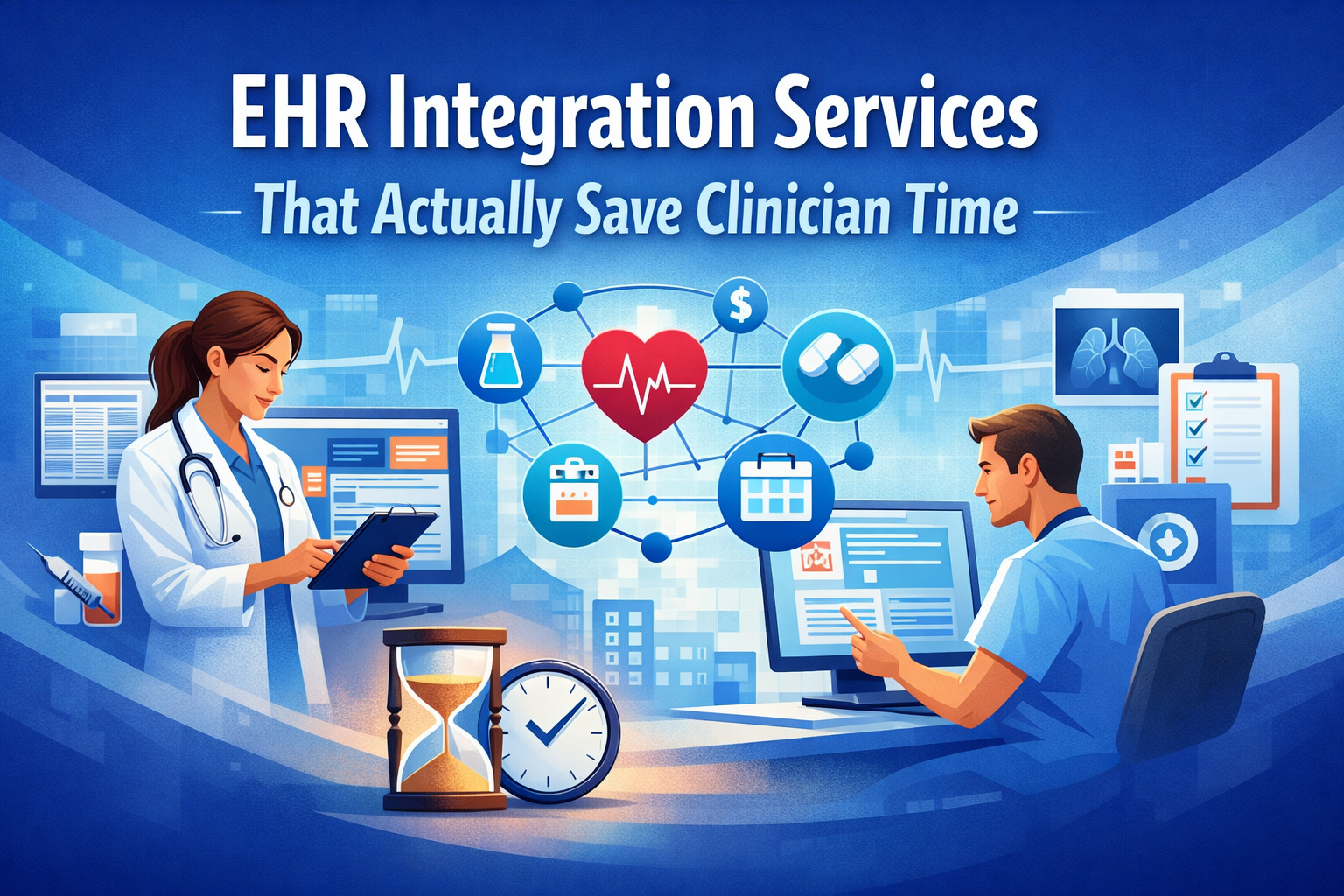
Clinicians don’t lose time because they lack skill or commitment—they lose time because systems don’t talk to each other. Logging into multiple platforms, re-entering patient data, chasing lab results, and fixing documentation errors quietly eats into hours that should be spent on patient care. This is where EHR integration services play a decisive role, not as a technical add-on, but as a real productivity driver inside healthcare organizations.
When done right, integration doesn’t just connect systems—it removes friction from daily clinical workflows.
The Real Time Drain in Clinical Workflows
Physicians and nurses often spend more time interacting with screens than patients. The problem is not the EHR itself, but the lack of seamless data exchange between systems like:
-
Practice management software
-
Laboratory information systems
-
Imaging platforms
-
Pharmacy systems
-
Billing and revenue cycle tools
Without integration, clinicians are forced to switch contexts constantly. Even small interruptions, like manually entering vitals or searching for past reports—add up to hours each week. Smart ehr integration services focus on eliminating these interruptions rather than simply syncing databases.
What “Time-Saving” Integration Actually Means
Not all integrations save time. Some only move data from point A to point B without considering how clinicians work. Effective integration is workflow-aware. It ensures that relevant information appears exactly when and where clinicians need it.
Time-saving integration typically delivers:
-
Automated data flow with zero manual entry
-
Real-time access to patient records
-
Unified dashboards instead of multiple logins
-
Fewer clicks to complete clinical tasks
The goal is not technical completeness but operational simplicity.
Key Integration Capabilities That Reduce Clinician Burden
1. Real-Time Data Synchronization
When patient data updates instantly across systems, clinicians no longer wait for information or verify outdated records. Lab results, medication changes, and discharge summaries appear directly in the EHR interface without refresh delays. This level of synchronization is a core outcome of mature ehr integration services.
2. Single-Point Clinical View
A unified patient profile that pulls data from EMR systems, diagnostic tools, and third-party applications reduces chart-hopping. Clinicians can review history, current treatment plans, and test results from one screen, improving decision speed and accuracy.
3. Automated Clinical Documentation
Integration with medical devices and diagnostic tools enables automatic capture of vitals, imaging results, and test data. This reduces documentation time and minimizes transcription errors—two major contributors to clinician fatigue.
4. Intelligent Alerts, Not Noise
Poorly integrated systems generate redundant or irrelevant alerts. High-quality integration filters notifications so clinicians only see what matters, such as critical lab values or medication conflicts, instead of generic system messages.
Interoperability Standards That Make a Difference
Time-saving integration depends heavily on standards. Technologies like HL7, FHIR, and APIs allow systems to exchange structured data efficiently. FHIR-based interoperability, in particular, supports modular integration and faster deployment cycles, making it easier to adapt workflows without system downtime.
By using modern interoperability frameworks, ehr integration services ensure that data exchange feels native, not forced, within clinical environments.
Reducing Administrative Load Through Smart Integration
Clinicians often take work home—not because of patient care, but because of unfinished documentation. Integration that connects EHRs with scheduling, billing, and claims systems can significantly reduce after-hours administrative tasks.
Examples include:
-
Auto-populating encounter notes with appointment data
-
Linking diagnosis codes directly to billing workflows
-
Syncing insurance eligibility data before patient visits
These small efficiencies compound into meaningful time savings over weeks and months.
Integration and Care Team Collaboration
Care delivery today is collaborative. Physicians, nurses, specialists, and administrative staff all contribute to patient outcomes. Integration ensures everyone works from the same data set.
Secure data sharing across departments prevents duplicate tests, repeated patient questioning, and miscommunication. With properly designed ehr integration services, collaboration becomes seamless rather than system-dependent.
Role of AI and Automation in Integration
AI-enhanced integration is moving beyond simple data exchange. Predictive algorithms can surface relevant patient insights automatically, while automation handles repetitive backend tasks like data validation and record matching.
When AI is embedded thoughtfully, clinicians spend less time searching and more time acting. This is especially valuable in high-volume settings like hospitals and urgent care centers.
Security and Compliance Without Slowing Workflows
One concern with integration is security. However, modern integration frameworks support HIPAA-compliant data exchange without adding steps for clinicians. Single sign-on, role-based access, and encrypted data transfer protect patient information while keeping workflows fast and intuitive.
Security should be invisible to clinicians, not another obstacle—and well-implemented ehr integration services achieve exactly that balance.
Choosing Integration That Supports Clinicians, Not Systems
Healthcare organizations often evaluate integration projects from an IT perspective. While technical stability matters, clinician experience should be the primary success metric.
Effective integration strategies:
-
Map real clinical workflows before development
-
Involve clinicians during design and testing
-
Prioritize usability over feature volume
-
Scale as care models evolve
Integration should adapt to clinicians—not force clinicians to adapt to technology.
Measurable Outcomes of Time-Saving Integration
Organizations that invest in meaningful integration often report:
-
Reduced documentation time per patient
-
Faster clinical decision-making
-
Lower clinician burnout rates
-
Improved patient satisfaction
-
Higher data accuracy across systems
These outcomes directly impact both care quality and operational efficiency.
Final Thoughts
Saving clinician time is not about adding more digital tools—it’s about making existing systems work together intelligently. When integration is designed around real-world workflows, it removes friction instead of creating it.
Well-executed ehr integration services transform fragmented healthcare environments into cohesive ecosystems where clinicians can focus on what truly matters: delivering better patient care without unnecessary administrative strain.
Read More – kinkedpress.com