
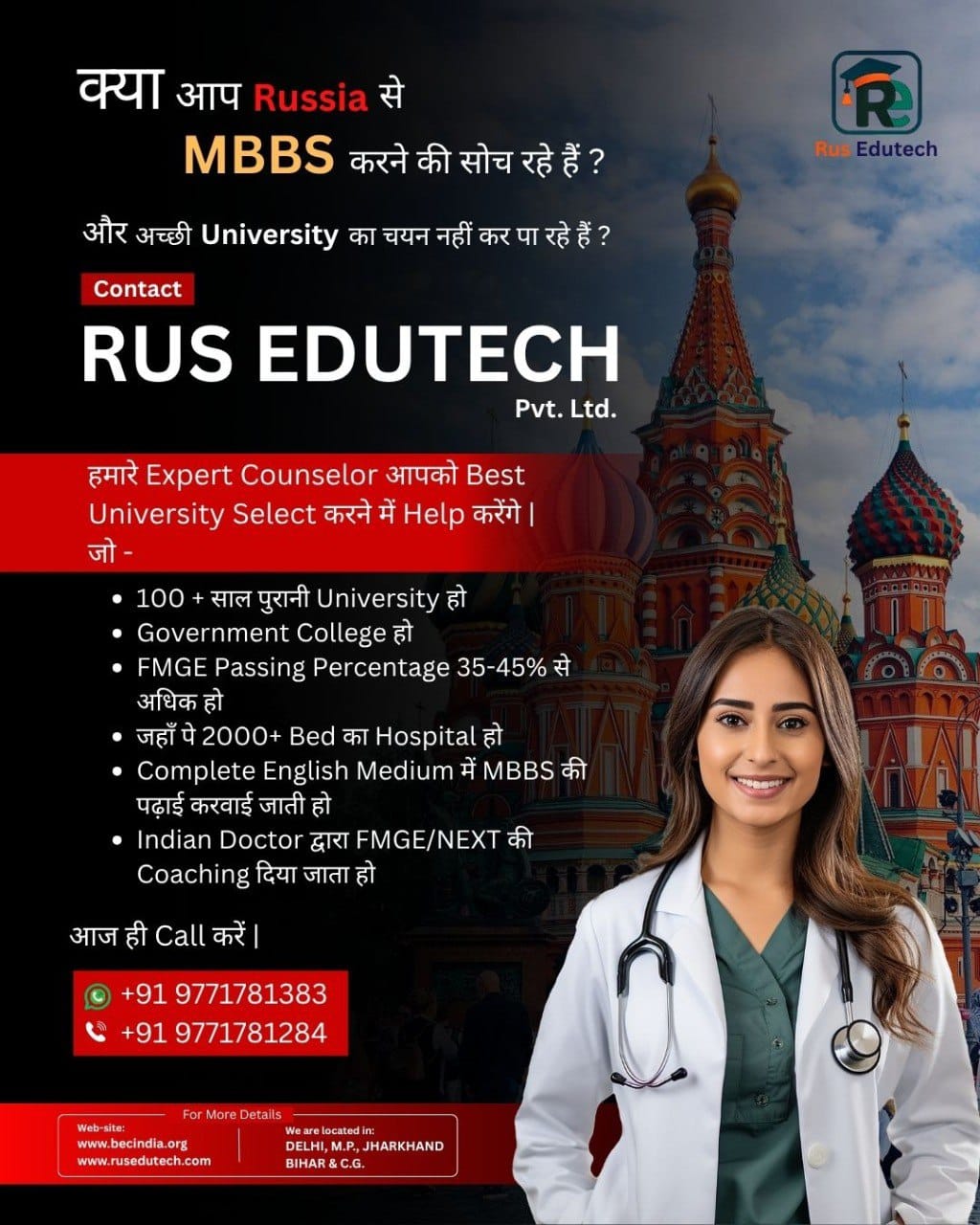
Studying MBBS in Russia has become one of the most popular choices for students seeking affordable and globally recognized medical education. Russia consistently ranks among the top destinations for international medical students due to its advanced teaching methods, strong infrastructure, and high-quality training at reasonable costs. This complete guide explains the duration, syllabus, and career opportunities after completing MBBS in Russia.
Why Choose MBBS in Russia?
Before diving into the academic structure, it is essential to understand why Russia is preferred by thousands of medical aspirants every year.
1. Affordable Tuition Fees
Compared to countries like the USA, UK, and even India’s private medical colleges, Russian medical universities offer cost-effective education with annual fees ranging from 2.5 to 6 lakhs INR.
2. Globally Recognized Degrees
Russian MBBS degrees are recognized by:
- WHO
- NMC (National Medical Commission)
- UNESCO
- FAIMER
- The medical councils of many countries
3. English-Medium Programs
Several top universities offer English-medium MBBS programs, making it easy for international students to learn.
4. Modern Infrastructure
Russian medical universities are equipped with modern laboratories, advanced teaching technology, simulation centers, and well-structured hospitals for clinical training.
MBBS in Russia: Duration of the Program
The duration of MBBS in Russia varies depending on the program structure and language of instruction.
1. Duration of English-Medium MBBS
For students opting for English-medium programs, the duration is typically:
6 Years
This includes:
- 5 years of theoretical and practical medical education
- 1 year of compulsory internship or clinical practice
2. Duration for Russian-Medium MBBS
Students who choose to study in the Russian language must complete:
7 Years
This includes:
- 1 year of preparatory (Russian language + basics)
- 5 years of medical training
- 1 year of internship
3. Clinical Training
Most universities start clinical exposure from the 3rd or 4th year, allowing students to learn in real hospital settings and interact with patients under supervision.
MBBS in Russia: Syllabus Overview
Russian medical universities follow a structured syllabus based on European medical education standards. The course is divided into three major stages:
Stage 1: Pre-Clinical (1st to 3rd Year)
Major Subjects Covered
- Anatomy
- Histology
- Physiology
- Biochemistry
- Microbiology
- Pathology
- Pharmacology
- General Surgery (basics)
- Psychology and Medical Terminology
Focus of This Stage
- Building a strong foundation of basic medical sciences
- Understanding the human body, its structure, and functions
- Laboratory-based learning and theoretical understanding
Students spend considerable time in laboratories working with cadavers, microscopic samples, and simulation tools.
Stage 2: Clinical Phase (3rd to 6th Year)
This stage introduces students to clinical subjects and real hospital training.
Core Clinical Subjects
- General Medicine
- General Surgery
- Internal Medicine
- Pediatrics
- Gynecology & Obstetrics
- Neurology
- Psychiatry
- Cardiology
- ENT (Otorhinolaryngology)
- Ophthalmology
- Radiology
- Orthopedics
- Dermatology
Practical Exposure
Students begin interacting with patients and participate in:
- Case history taking
- Diagnosis and treatment planning
- Bedside learning
- Clinical rotations in hospitals
Stage 3: Internship (Final Year)
During the 6th year, students complete a supervised clinical internship. Rotations usually include:
- Surgery
- Internal Medicine
- Emergency Medicine
- Obstetrics & Gynecology
- Pediatrics
- Community Medicine
The internship is essential for gaining hands-on experience and achieving clinical confidence.
Career Scope After MBBS in Russia
Graduates of Russian medical universities have diverse career opportunities, both in India and abroad.
1. Practicing in India
To practice in India, graduates must clear the NMC Screening Test, also known as the FMGE (Foreign Medical Graduate Examination) or the new NEXT exam system.
Advantages
- Russian MBBS universities offer FMGE coaching.
- The syllabus is aligned with NMC/NEXT requirements.
Once the exam is cleared, graduates can:
- Register with the NMC
- Pursue internships in India
- Practice as licensed doctors
- Apply for PG courses in India
2. Pursuing Postgraduate Studies Abroad
Students can appear for entrance exams like:
- USMLE (USA)
- PLAB (UK)
- AMC (Australia)
- MCCQE (Canada)
Russian degrees are recognized globally, helping graduates pursue specialization in top countries.
3. Practice Medicine in Russia or Europe
After completing MBBS, students can:
- Practice directly in Russia
- Pursue MD or other specialization programs
- Move to Schengen countries after clearing their licensing exams
4. Opportunities in Research and Clinical Fields
Students interested in research can join:
- Medical research organizations
- Pharmaceutical companies
- Public health organizations
- Biotechnology firms
Russia’s strong emphasis on scientific research opens many doors for ambitious graduates.
Conclusion
MBBS in Russia for Indian Students provides an excellent blend of quality education, affordable fees, and global recognition. With well-structured programs, experienced faculty, and advanced medical facilities, students receive world-class training and exposure. The course duration of 6 years, comprehensive syllabus, and extensive career opportunities make Russia a top choice for aspiring doctors.
For students seeking a trusted, affordable, and globally accepted medical degree, MBBS in Russia remains one of the most rewarding options.