
In the complex landscape of industrial and construction safety, no single piece of personal protective equipment (PPE) is more critical than the respirator. The air that workers breathe on any given job site, from chemical plants to dusty demolition zones can be the silent carrier of long-term health hazards. Establishing a comprehensive and compliant program for Respiratory Protective Equipment (RPE) is not just a regulatory checklist item; it is an investment in human life and operational continuity.
The first step in any effective RPE program is a thorough hazard assessment. You must precisely identify the airborne contaminants (dust, mist, fumes, gases, or vapors), their concentration levels, and the conditions of exposure. This analysis dictates the entire subsequent process, as selecting the wrong type of respiratory protective equipment offers nothing but a false sense of security. Protection requirements range widely, demanding specialized solutions for different threats, from simple N95 masks for nuisance dust to advanced Supplied-Air Respirators (SARs) for toxic environments.
The Two Pillars of RPE: Air-Purifying vs. Atmosphere-Supplying
Respiratory protective equipment broadly falls into two primary categories, each defined by how it delivers clean air to the user:
1. Air-Purifying Respirators (APRs):
These devices filter the ambient air passing through them. They include:
-
Filtering Facepiece Respirators (N95, P100): Disposable masks that cover the nose and mouth, removing particulates.
-
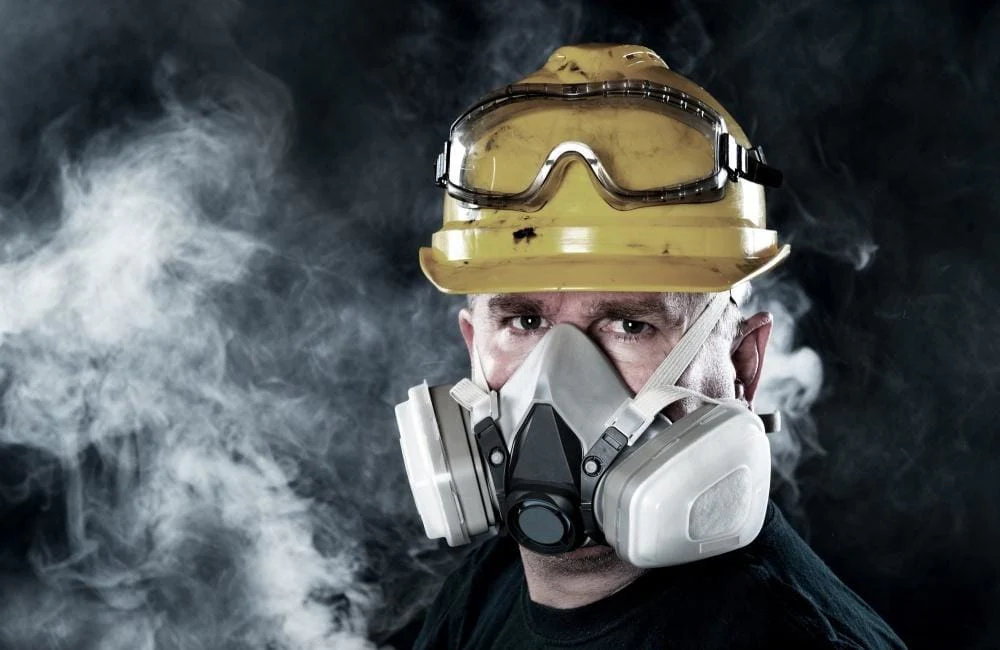
Elastomeric Respirators (Half and Full Face): Reusable masks that use replaceable cartridges and filters to clean the air. These can protect against particulates, gases, and vapors, provided the correct cartridge is used.
The crucial limitation of APRs is that they only work if the contaminant concentration is within regulatory limits and there is sufficient oxygen (at least 19.5%) in the surrounding air. They cannot create oxygen; they only clean the air already present.
2. Atmosphere-Supplying Respirators (ASRs):
These devices deliver breathing air from a clean source outside the contaminated environment. They are mandated for high-risk situations, including areas that are immediately dangerous to life or health (IDLH) or oxygen-deficient spaces.
-
Supplied-Air Respirators (SARs): Connected via a hose to an external air compressor or cylinder bank. They offer extended use but limit the worker’s mobility.
-
Self-Contained Breathing Apparatus (SCBA): The worker carries their own air cylinder, offering complete mobility but limited duration (usually 30–60 minutes).
Choosing the right respiratory protective equipment requires meticulous attention to the Assigned Protection Factor (APF), a numerical rating (like 10 for a tight-fitting half-facepiece) that indicates how much protection the device should theoretically provide.
The Non-Negotiable Step: Fit Testing and Seal Integrity
A respirator is utterly useless if it does not seal correctly against the wearer’s face. Studies have repeatedly shown that poor fit is the number one reason for RPE failure. This highlights the absolute necessity of comprehensive fit-testing protocols.
OSHA (Occupational Safety and Health Administration) mandates that employees using any tight-fitting respiratory protective equipment (disposable, half-face, or full-face) must undergo a fit test at least annually, and whenever a new model or size of mask is issued, or if the employee experiences significant facial changes (weight change, dental work, etc.).
There are two main fit testing methods:
-
Qualitative Fit Testing (QLFT): Uses an observable substance (like saccharin or Bitrex solution) where the worker detects a taste if the seal is compromised. It’s often used for half-face respirators and is pass/fail.
-
Quantitative Fit Testing (QNTF): Uses an instrument to measure the particle concentration outside the respirator versus the particle concentration inside the respirator, providing a specific “Fit Factor.” This is highly accurate and often required for full-face masks.
The golden rule that cannot be ignored is: NO FACIAL HAIR in the sealing area. Even a day’s stubble can compromise the seal integrity, turning a certified N95 into ineffective cloth. Clear guidance on personal hygiene is a critical component of any effective respiratory protective equipment program.
Beyond the Basics: Training, Maintenance, and Change Schedules
Effective RPE programs extend far beyond simply issuing a mask. Compliance and safety are built through continuous training and stringent maintenance:
-
Training: Employees must be taught how to properly put on (don) and take off (doff) the respirator, how to perform user seal checks (positive and negative pressure checks), and understand the limitations of their specific device.
-
Maintenance: Reusable respirators must be cleaned, inspected, and properly stored after every use. Deteriorated head straps, damaged valves, or cracked seals must result in immediate removal of the unit from service.
-
Cartridge Change Schedules: For gas/vapor cartridges, there is no visual indicator of depletion. Employers must establish a rigorous change-out schedule, calculated based on the contaminant concentration, exposure duration, humidity, and airflow rates. Failing to change a cartridge on time means the worker is breathing filtered, but no longer protected, air.
In conclusion, ensuring worker safety from airborne hazards requires diligence, precise equipment selection, and unwavering commitment to compliance. By adhering to the standards for hazard assessment, fit testing, training, and maintenance, companies can successfully deploy the correct respiratory protective equipment, securing the health and productivity of their most valuable asset: their people.