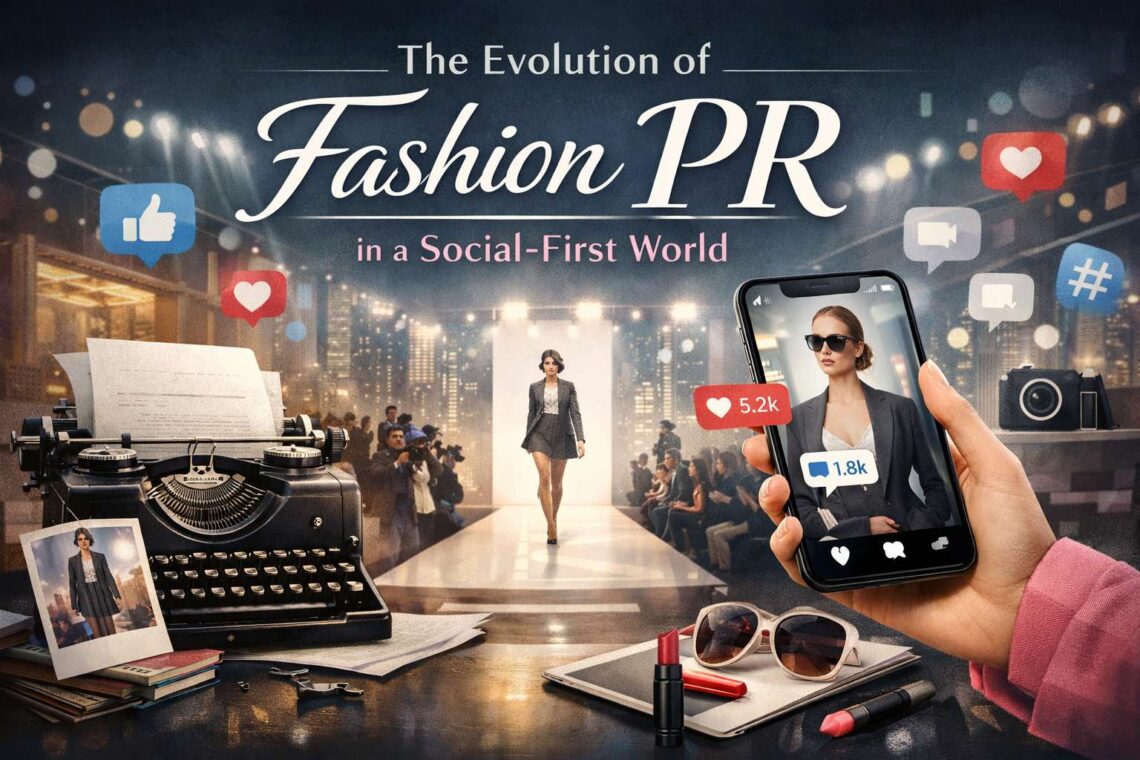
In an era where social media shapes cultural narratives and consumer habits, fashion public relations (PR) has undergone a fundamental transformation. Traditional PR once revolved around carefully curated media placements, seasonal press days, and exclusive magazine coverage. Today, the industry’s heartbeat is defined by immediacy, visual storytelling, and direct audience engagement. This evolution reflects broader shifts in how people discover, consume, and interact with fashion content — and it has redefined success for brands in a social‑first world.
From Print Pages to Social Feeds: A Paradigm Shift
Historically, fashion PR centred on securing coverage in glossy magazines and orchestrating glamorous runway events. These high‑profile moments offered brand legitimacy and cultural cachet, but access was limited. Only a select group of editors, stylists, and influential buyers could shape public perception.
Social media changed that dynamic entirely. Platforms like Instagram, TikTok, and YouTube transformed the fashion landscape by making visual storytelling immediate, global, and participatory. Designers, brands, and personalities can now publish directly to millions of followers without the filter of traditional media. This democratization has lowered barriers to influence, enabling voices outside the conventional editorial hierarchy to shape trends and consumer preferences in real time.
The Rise of Influencers and the New Fashion Ecosystem
In the social‑first era, influencers — individuals with dedicated digital followings — have become indispensable to fashion PR strategies. Far from merely endorsing products, top influencers and niche content creators now co‑create narratives that resonate with their communities. Their authentic, often unpolished content holds more sway with audiences than traditional celebrity endorsements, offering relatable insight into style, lifestyle, and personal values.
Micro‑ and nano‑influencers, with smaller but highly engaged audiences, provide an especially effective avenue for targeted campaigns. These creators often boast strong trust and credibility among followers, leading to higher engagement and measurable impact on consumer behaviour.
Social Commerce: Where Engagement Meets Conversion
One of the most significant shifts in fashion PR is the integration of social commerce — the ability for users to make purchases directly within social platforms. Instagram, TikTok, and Pinterest have all developed shopping features that allow brands to tag products, showcase collections, and convert engagement into sales without users ever leaving the app. This blending of content and commerce blurs the line between PR and marketing, creating a seamless consumer journey from discovery to purchase.
This evolution has profound implications for PR professionals, who now collaborate more closely with marketing teams to ensure that storytelling aligns with measurable business objectives. A viral video or highly shared Instagram Reel can instantly transform awareness into revenue — a dynamic that was unimaginable in the pre‑social media age.
Real‑Time Storytelling and Authentic Engagement
The modern fashion audience expects real‑time, transparent communication. Social platforms have trained consumers to expect immediacy — whether through live streaming fashions shows, behind‑the‑scenes content, or direct interaction via comments and messages. Platforms’ live capabilities have made once‑exclusive fashion weeks accessible to global audiences, fostering conversations that extend far beyond the runway.
This shift demands PR strategies that prioritize authenticity and responsiveness. Brands must navigate cultural conversations as they unfold, responding to trends, criticism, and opportunities with agility. In this landscape, PR isn’t just about controlling narratives — it’s about participating in them.
Data‑Driven Insights: Precision Meets Creativity
Another transformational aspect of social‑first PR is the widespread availability of data analytics. Unlike traditional PR efforts that relied on estimated impressions and anecdotal feedback, social media platforms provide concrete metrics on engagement, reach, sentiment, and conversion. PR professionals now use these insights to refine campaigns, target key demographics more effectively, and measure campaign success against defined KPIs.
By harnessing data, fashion brands can tailor their messaging and creative output to what resonates most deeply with specific audiences — ensuring that every campaign is both impactful and measurable.
The Future Is Social, Collaborative, and Inclusive
Looking ahead, fashion PR will continue to evolve in tandem with social platforms and cultural expectations. Consumer demand for inclusivity, sustainability, and authenticity will drive new forms of engagement that require brands to be both socially aware and digitally savvy. Collaborations with creators, interactive multimedia campaigns, and community‑centric storytelling will become standard practice, not exceptions.


