
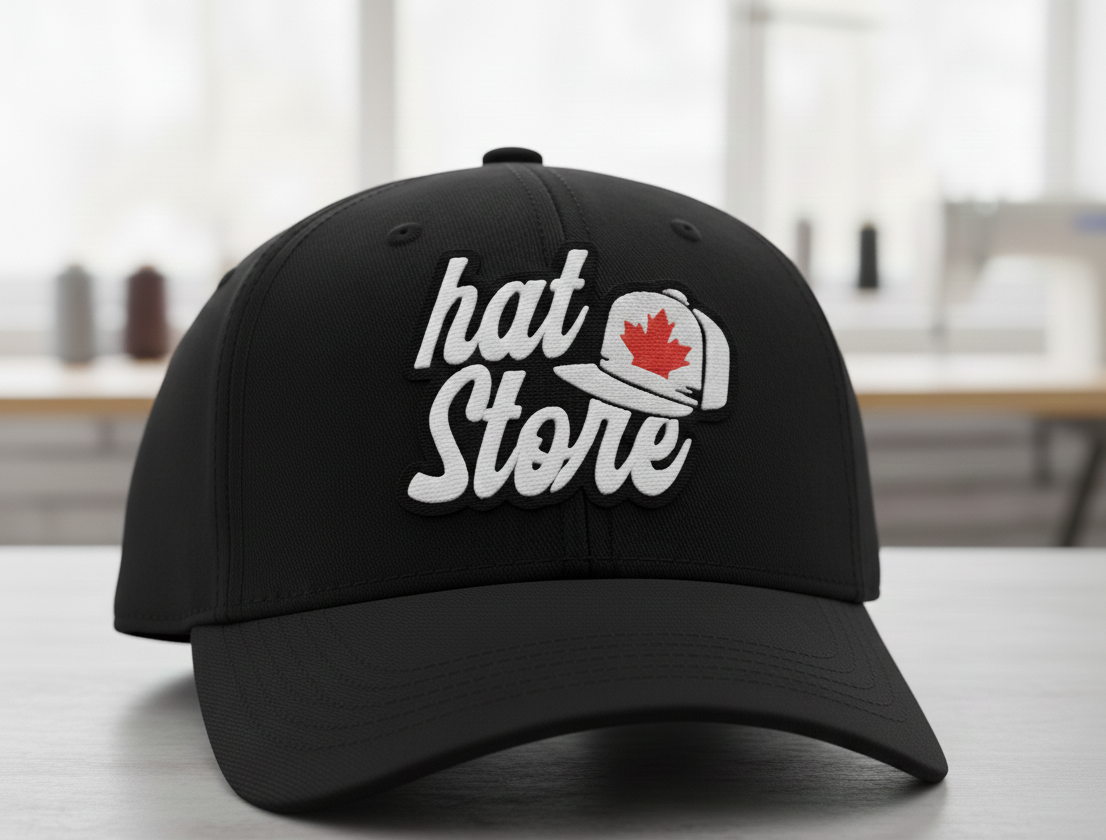
The year’s 2026. Headphones on. Coffee cooling too fast in a paper cup that’s already going soft. You pass a glass storefront, catch your reflection, and notice the hat first. Always the hat. Screens sell dreams. Streets expose lies. Digital mockups promise smooth crowns and clean thread lines, then reality hands you something stiff, itchy, and loud in the wrong way. Real wear starts outside, not in a browser tab, and the sidewalk doesn’t care about marketing language or filtered product shots.
Sweatshop Specials Everywhere
There’s a flood of sweatshop specials clogging feeds right now. Hats rushed through overseas lines, buckram slapped in without thought, crowns pressed flat under heat that cooks fibers brittle. You feel it the moment it hits your head. Cardboard energy. Stitching that looks tight online but loosens after one wash. Embroidery puckers because the backing was cheap and the needle heat was pushed too high to save seconds per unit. Salt builds fast when you’ve been burned before.
“This Feels Crunchy”
Two friends outside a corner store. One flicks the brim of a new cap.
“Why’s it sound like that?”
“It’s crunchy.”
“No way.”
“Way. Like cereal.”
That tiny exchange tells the whole story. People know bad hats instantly. Crunch means cheap buckram. Crunch means low stitch density pulling fabric inward. Crunch means a crown that’ll warp once sweat hits the seam tape. No spreadsheet needed.
What Holds a Crown Together
Shape isn’t magic. It’s physics and material discipline. A crown stays upright when the fabric weight matches the buckram stiffness. Think 400gsm cotton paired with mid-weight buckram that bends without memory loss. Too light and it collapses. Too heavy and it fights your head, creating pressure points by the temples. Needle heat matters too. Overheated needles glaze thread, weakening tension. Sweat hits later, threads relax unevenly, and the logo starts rippling like it’s underwater.
Brims Tell the Truth
Brims fail quietly at first. A soft dip near the stitch line. A slow curl at the edges. That comes from cheap inserts that absorb moisture and never dry straight again. Proper brim material resists warping because it balances flex with rebound. You bend it. It bends back. Miss that balance and the hat looks tired before the season’s done. No amount of reshaping fixes internal fatigue.
The Embroidery Problem Nobody Admits
Embroidery looks bold until wash number one. Puckering happens when stitch density overwhelms the base fabric or when backing quality drops. High-density designs need stable fabric and controlled tension. Skip that and the logo shrinks while the crown stays put. That’s why so many hats look anxious around the emblem, like the fabric’s bracing for impact. Sweatband wicking plays a role too. Poor wicking traps moisture, swelling threads from the inside out.
Cheap Isn’t Cheap
The counter-argument always pops up. Why pay more? Because replacement costs stack quietly. Two dead hats in a month beat one solid piece that lives for years. Time wasted returning junk. Money burned on shipping. Frustration you didn’t budget for. That’s how cheap turns expensive without asking permission. The math’s boring but brutal, and it repeats until you stop buying fantasies.
Teams, Logos, Reality
Uniformity matters when a group wears the same piece. That’s why trendy custom baseball caps for teams fall apart so fast when corners get cut. One crown sags. Another twists. Logos sit crooked at different heights. On the field or on the street, inconsistency screams louder than bad color choices. Group gear needs tighter controls than solo fashion, not looser ones.
One Name, One Time
Some buyers learn by losing money. Others learn by paying attention early and saving themselves the trouble. Hat Store Canada gets mentioned here once because consistency usually shows up where most people stop looking. Not in flashy launches or loud claims, but in the boring parts that actually take abuse. Materials that don’t fight each other. Embroidery that stays put instead of tightening up after a few wears. Sweatbands that handle moisture without turning heavy or sour. Nothing dramatic. No magic fixes. Just products that behave the same on day thirty as they did on day three, which is rarer than it should be.
Regional Reality
Weather matters. Winters punish brims. Summers punish sweatbands. That’s why buyers hunting custom hats Canada should care about material behavior across seasons, not just launch photos. Cold stiffens cheap inserts. Heat exposes weak thread tension. Streets test everything eventually.
Final Audit
If a sentence sounds like a brochure, it lies. That’s the easiest filter you’ll ever use. Hats either survive real use or they slowly turn into something you stop reaching for. Feel the crown with your hand instead of trusting photos. Flick the brim and notice how it reacts, not how it looks. Check the back seam after you’ve washed it once. That’s usually the first place things start giving up. Wear it long enough to actually sweat in it and notice how the inside feels afterward, not right away, but later. Good quality doesn’t try to win you over or make a big deal about itself. It doesn’t need explaining or defending. It just keeps working, quietly, without asking you to be patient or cut it some slack.. That’s the whole trick.