
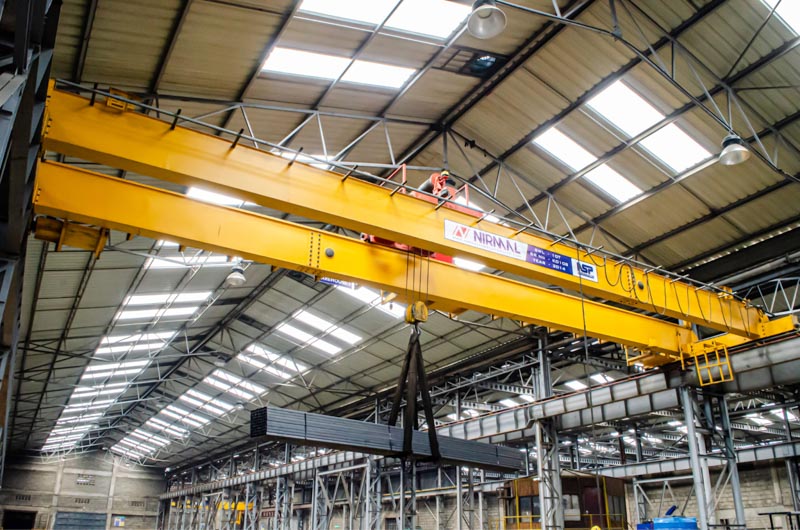
Overhead cranes drive productivity across manufacturing, logistics, and heavy industry. They lift, move, and position loads with speed and accuracy. Because facilities demand safety and efficiency, these systems play a central role. Moreover, smart designs now support automation, energy savings, and precise control. As industries scale, cranes help teams handle heavier loads without delays. Therefore, understanding crane systems supports better planning and safer operations.
In today’s factories, overhead cranes support daily workflows with consistent performance. They reduce manual handling while improving throughput. Additionally, managers rely on cranes to optimize floor space and workflow paths. Because loads travel above work areas, operations stay organized. Consequently, facilities gain flexibility without expanding footprints.
What Are Overhead Cranes?
Overhead cranes move loads along elevated runways. They use a hoist, trolley, and bridge to travel across bays. Operators control movement from pendant controls, cabins, or remote systems. Unlike floor-based equipment, cranes keep pathways clear. As a result, teams enjoy safer and faster material handling.
Core Components Explained
Each crane includes a bridge, runway, hoist, trolley, and controls. The bridge spans the workspace and carries the hoist. The trolley moves along the bridge to position loads. Meanwhile, the hoist raises and lowers materials. Controls provide precise motion and speed. Together, these parts deliver coordinated movement.
How Overhead Cranes Operate
Operators command horizontal and vertical motions in sequence. First, the hoist lifts the load. Next, the trolley positions it along the bridge. Then, the bridge travels across runways. Because motions stay independent, placement remains accurate. Therefore, operators achieve smooth handling with minimal sway.
Types of Overhead Cranes
Facilities choose crane types based on load, span, and duty cycle. Each option offers distinct benefits. Consequently, selection affects cost, safety, and productivity.
Single Girder Overhead Cranes
Single girder cranes use one main beam. They suit light to moderate loads. Because they weigh less, installation costs stay lower. Additionally, they consume less power. For many workshops, this option balances performance and affordability.
Double Girder Overhead Cranes
Double girder cranes support heavier loads and wider spans. They provide greater hook height and stability. Therefore, steel mills and power plants prefer them. Moreover, they allow higher speeds for demanding cycles.
Under Running Cranes
Under running cranes attach to the roof structure. They work well in limited spaces. Since they use existing support, they reduce column requirements. Consequently, facilities maximize usable floor area.
Top Running Cranes
Top running cranes travel on rails mounted on columns. They handle higher capacities with ease. Because they rely on independent supports, they suit large industrial buildings. As a result, they dominate heavy-duty environments.
Key Benefits of Overhead Cranes
Overhead cranes deliver measurable advantages. They improve safety, efficiency, and layout flexibility. Furthermore, modern features add intelligence and control.
Improved Workplace Safety
Cranes reduce manual lifting and repetitive strain. Operators handle loads from a distance. Therefore, injury risks decline. Additionally, safety devices prevent overloads and collisions.
Increased Productivity
Faster load handling shortens cycle times. Crews move materials without interruptions. Consequently, output rises while labor costs stabilize. Moreover, precise placement reduces rework.
Space Optimization
By moving loads overhead, facilities free floor space. Aisles remain clear for traffic. Therefore, layouts improve without expansion. This advantage supports lean manufacturing goals.
Applications Across Industries
Overhead cranes serve many sectors. Each industry adapts crane systems to specific needs. As a result, versatility defines their value.
Manufacturing and Assembly
Factories use cranes to move components between stations. They support assembly lines and machining centers. Because accuracy matters, cranes ensure consistent placement.
Warehousing and Logistics
Distribution centers rely on cranes for bulk handling. They lift pallets and containers efficiently. Therefore, inventory flows smoothly through storage zones.
Construction and Steel Fabrication
Fabricators lift beams and plates safely. Cranes handle long loads with stability. Consequently, projects progress faster and safer.
Power Plants and Utilities
Maintenance teams lift turbines and generators. Cranes support precise alignment during servicing. Thus, downtime reduces and reliability improves.
Choosing the Right Overhead Crane
Selecting the right crane requires planning. Decision-makers must evaluate load, span, and environment. Therefore, a structured approach helps.
Load Capacity and Duty Cycle
Define maximum and average loads clearly. Consider frequency of lifts and speeds. Because duty cycles vary, sizing affects longevity. Proper selection prevents premature wear.
Span and Building Constraints
Measure bay width and ceiling height. Evaluate column spacing and runway length. Since buildings differ, designs must align with structures.
Control and Automation Options
Choose pendant, radio, or cabin controls. Automation adds repeatability and safety. Therefore, advanced controls suit high-volume operations.
Installation and Commissioning
Professional installation ensures performance and safety. Teams must align runways and calibrate controls. Moreover, testing verifies load ratings and movements. After commissioning, operators receive training. Consequently, systems enter service with confidence.
Maintenance and Inspection Best Practices
Regular maintenance protects investments. Inspections detect wear before failures occur. Therefore, planned care prevents downtime.
Preventive Maintenance Schedules
Schedule lubrication, adjustments, and checks. Monitor brakes, cables, and electrical systems. Because consistency matters, logs support compliance.
Safety Inspections and Compliance
Follow local standards and regulations. Inspect limit switches and safety devices. Consequently, audits pass and risks reduce.
Future Trends in Overhead Cranes
Technology continues to reshape cranes. Smart systems now collect data and optimize performance. Therefore, future-ready facilities gain advantages.
Smart Monitoring and IoT
Sensors track loads, usage, and health. Data enables predictive maintenance. As a result, failures decrease and uptime improves.
Energy Efficiency Innovations
Regenerative drives save energy during lowering. Lightweight designs reduce power demand. Consequently, operating costs decline.
Automation and Integration
Cranes integrate with production systems. Automated paths increase consistency. Therefore, human intervention decreases in repetitive tasks.
Conclusion
Overhead cranes remain essential to industrial success. They enhance safety, productivity, and space utilization. With proper selection and care, they deliver long-term value. Moreover, modern innovations expand capabilities and efficiency. As industries evolve, cranes will continue to support growth and precision.