
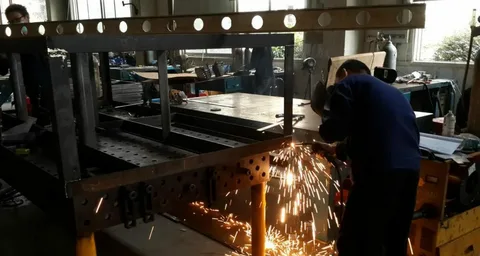
Sheet metal welding has long been a cornerstone of modern manufacturing, construction, automotive production, and aerospace engineering. From assembling lightweight components to fabricating complex industrial structures, this process plays a vital role in shaping durable and high-performance products. As global industries evolve and demand higher precision, efficiency, and sustainability, sheet metal welding is undergoing a major transformation driven by advanced technologies and innovative practices.
The future of sheet metal welding is being shaped by automation, digitalization, smarter materials, and environmentally conscious methods. Manufacturers are no longer focused solely on strength and speed; they are prioritizing accuracy, cost efficiency, and long-term reliability. This article explores the most significant future trends and innovations in sheet metal welding, highlighting how these developments are redefining production standards and opening new opportunities across industries.
Automation and Robotics in Sheet Metal Welding
Automation is one of the most influential trends shaping the future of sheet metal welding. Robotic welding systems are increasingly being adopted to handle repetitive and complex tasks with unmatched consistency and speed. These systems significantly reduce human error, improve weld quality, and increase production output. Automated sheet metal welding solutions are especially valuable in industries such as automotive manufacturing, where precision and uniformity are critical for safety and performance.
As robotic systems become more intelligent, they are now equipped with sensors, vision systems, and adaptive controls that allow real-time adjustments during the welding process. This means robots can automatically detect variations in material thickness, joint alignment, or temperature and adjust parameters accordingly. In the future, fully autonomous sheet metal welding cells will dominate large-scale production environments, enabling manufacturers to achieve higher efficiency while reducing labor costs and workplace hazards.
Artificial Intelligence and Smart Welding Technologies
Artificial intelligence (AI) is revolutionizing sheet metal welding by making processes smarter, faster, and more predictive. AI-driven welding systems analyze massive amounts of data from previous welds to optimize parameters such as heat input, welding speed, and filler material usage. This results in improved weld strength, reduced defects, and enhanced consistency across production batches.
Machine learning algorithms are also being integrated into sheet metal welding equipment to enable predictive maintenance and quality assurance. By monitoring equipment performance and weld characteristics in real time, AI systems can detect potential issues before they lead to costly failures. In the future, smart welding technologies will allow manufacturers to achieve near-zero defect rates while minimizing downtime and material waste, making sheet metal welding more reliable than ever before.
Advanced Materials and Lightweight Alloys
The growing demand for lightweight, high-strength products is driving innovation in materials used for sheet metal welding. Industries such as aerospace, automotive, and renewable energy are increasingly relying on advanced alloys, including aluminum, titanium, and high-strength steel. These materials offer excellent performance but require specialized welding techniques to maintain structural integrity and prevent defects.
Future innovations in sheet metal welding will focus on developing processes that can handle these advanced materials more effectively. Techniques such as laser welding, friction stir welding, and hybrid welding methods are gaining popularity due to their ability to produce clean, precise welds with minimal heat distortion. As new lightweight materials continue to emerge, sheet metal welding technologies will evolve to meet the challenges of joining complex alloys while maintaining strength and durability.
Laser Welding and High-Precision Welding Methods
Laser welding is becoming a game-changer in the world of sheet metal welding due to its exceptional precision and speed. This method uses a concentrated laser beam to create narrow, deep welds with minimal heat-affected zones. As a result, laser welding is ideal for thin sheet metal applications where accuracy and aesthetics are critical, such as electronics, medical devices, and automotive components.
In the future, advancements in laser technology will make laser-based sheet metal welding more accessible and cost-effective for small and medium-sized manufacturers. Fiber lasers, improved beam control, and automation integration will further enhance welding quality and efficiency. High-precision welding methods like laser welding will continue to set new standards for quality, allowing manufacturers to produce intricate designs without compromising structural performance.
Sustainability and Eco-Friendly Welding Practices
Sustainability is becoming a major driving force behind innovations in sheet metal welding. Manufacturers are under increasing pressure to reduce energy consumption, minimize emissions, and lower material waste. Future welding technologies are being designed with environmental responsibility in mind, focusing on energy-efficient equipment and cleaner welding processes.
Eco-friendly sheet metal welding practices include the use of low-emission welding methods, recyclable materials, and optimized power usage. Advanced monitoring systems help reduce over-welding and material waste, while improved ventilation and fume extraction systems protect both workers and the environment. As sustainability regulations tighten globally, green welding solutions will become an essential part of modern sheet metal welding operations.
Conclusion
The future of sheet metal welding is defined by innovation, intelligence, and sustainability. Automation, artificial intelligence, advanced materials, laser technology, and eco-friendly practices are transforming traditional welding into a highly advanced manufacturing process. These trends are not only improving efficiency and quality but also enabling manufacturers to meet the growing demands of modern industries.
As sheet metal welding continues to evolve, businesses that embrace these emerging technologies will gain a competitive edge in terms of productivity, precision, and cost control. By investing in future-ready welding solutions, manufacturers can ensure long-term success while contributing to safer workplaces and a more sustainable industrial landscape. The next generation of sheet metal welding is smarter, cleaner, and more efficient—and it is already shaping the future of manufacturing worldwide.