
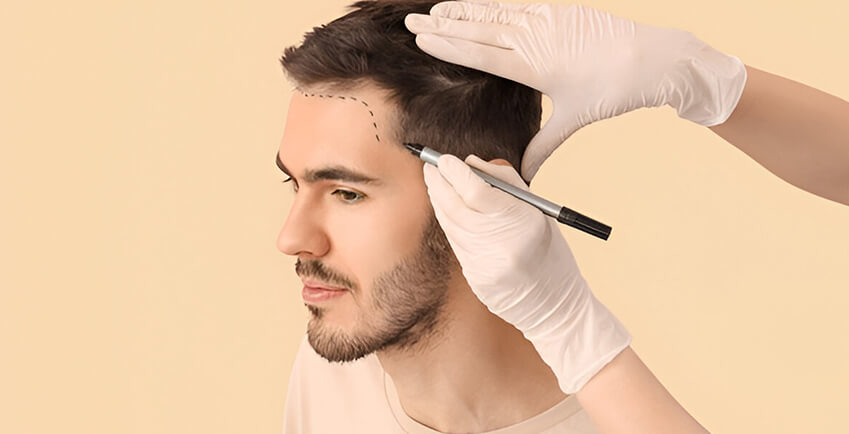
When considering a Hair transplant without shaving in Dubai UAE , individuals often face a crucial decision: whether to undergo a traditional Shaved Hair Transplant (Standard FUE) or opt for the advanced Unshaven Hair Transplant (UFUE or No-Shave DHI).
Both procedures are based on the Follicular Unit Extraction (FUE) principle of relocating permanent hair follicles from a dense donor area to a thinning recipient area. However, they differ significantly in terms of preparation, surgical process, cost, recovery, and suitability for patients.
Understanding these distinctions is crucial for managing expectations and selecting the procedure that aligns best with the patient’s clinical requirements, financial considerations, and lifestyle preferences.
RESULT OF HAIR TRANSPLANT IN DUBAI :
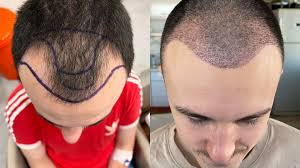
I. Preparation and Post-Op Appearance (The Aesthetic Aspect)
The most noticeable difference between the two techniques lies in how the hair is managed before and immediately after the procedure.
Feature
Shaved Hair Transplant (Standard FUE)
Unshaven Hair Transplant (UFUE/No-Shave DHI)
Donor Area Preparation
Fully Shaved: The entire donor area is uniformly clipped to 1–2 mm.
Selectively Trimmed: Only the follicles to be extracted are trimmed, leaving surrounding long hair intact for immediate concealment.
Recipient Area Preparation
Fully Shaved or Heavily Clipped: The recipient area is usually clipped short for optimal visibility and access.
Unshaven: Existing long hair remains, and grafts are implanted between the strands.
Post-Op Appearance
Highly Visible: The surgical intervention is evident, requiring a period for the hair to grow out and conceal the shaved areas.
Concealed/Discreet: Long hair covers the extraction and implantation sites, making the procedure inconspicuous.
Social Downtime
Long: Typically 10 to 20 days until the shaved areas are concealed by hair growth.
Short: Reduced to 3 to 7 days due to immediate concealment.
Key Takeaway: Shaved FUE sacrifices aesthetics initially but enhances surgical efficiency, while Unshaven FUE prioritizes discretion over simplicity.
Why Choose an FDA-Approved Glamorous Clinic in Dubai?
When it comes to facial cosmetic treatments, Safety and Hygiene should be your top priorities. Choosing an FDA-approved clinic in Dubai ensures that:
- All equipment and materials meet U.S. FDA safety standards.
- Procedures are carried out by qualified and licensed cosmetic surgeons.
- You receive sterile, risk-free, and high-quality care.
- The clinic follows international medical guidelines for patient safety and aftercare.
II. Surgical Execution and Technical Limits
Working around long hair poses challenges that impact the surgical process, setting constraints on the No-Shave technique.
A. Speed and Graft Capacity
Shaved FUE: Clear visibility enables rapid extraction and placement, allowing for transplanting 3,000 to 5,000 grafts in a single session.
Unshaven FUE/DHI: Meticulous work to avoid damaging existing hair limits the graft capacity to 2,000 to 2,500 per session, focusing on discretion over quantity for hair loss surgery in dubai for man hair problems
B. Tooling and Precision
Shaved FUE: Standard FUE punches, followed by creating recipient channels with fine blades, and graft placement with forceps.
Unshaven FUE/DHI: Relies on the DHI method using the Choi Implanter Pen for precise control over graft angle and direction.
C. Technical Risk
Shaved FUE: Low risk due to clear visibility.
Unshaven FUE/DHI: Higher risk due to reduced visibility, leading to potential graft damage and temporary shock loss to existing hair.
III. Cost, Time, and Patient Candidacy
The differences in complexity and time commitment translate into distinct cost structures and patient suitability profiles.
A. Cost and Value Proposition
Shaved FUE: Cost-effective with high graft yield and density.
Unshaven FUE/DHI: Premium price due to longer surgical time, specialized tools, and skilled team requirements.
B. Ideal Candidate Profiles
Shaved FUE: Suitable for advanced hair loss and cost-conscious individuals.
Unshaven FUE/DHI: Ideal for mild to moderate hair loss cases requiring discretion and immediate return to public life.
IV. Recovery and Aftercare
While the growth cycle of transplanted hair remains consistent, immediate aftercare varies based on hair length.
Aspect
Shaved FUE
Unshaven FUE/DHI
Graft Dislodgement Risk
Low risk, with visible healing sites.
Higher risk due to long hair snagging, requiring careful handling.
Post-Op Cleaning
Easy with visible scalp, allowing thorough cleaning.
Challenging, requiring diligence to clean scabs hidden under long hair.
Visibility of Healing
Visible scabbing for 5–10 days.
Scabbing concealed by long hair during healing.
Conclusion: Choosing the Right Procedure
The decision between Shaved and Unshaven Hair Transplants depends on individual priorities and needs. Shaved FUE offers maximum density and cost-effectiveness for advanced hair loss, while Unshaven FUE/DHI provides discretion and a quick return to public life for mild to moderate cases.
FAQS of Hair Transplant Surgery Dubai :
1. What is the fundamental difference between the two procedures?
- Shaved FUE: Requires the entire head (or large sections of the donor and recipient areas) to be shaved short (1-2 mm). It offers high surgical efficiency.
- Unshaven FUE: Requires no visible shaving. Grafts are selectively trimmed and extracted from the donor area, leaving the surrounding hair long to provide immediate concealment
2. Which procedure offers the quickest recovery in terms of appearance?
The Unshaven FUE offers the quickest aesthetic recovery. Patients can typically return to social or professional life within 3 to 5 days because the existing long hair hides the signs of surgery.
3. Does the Unshaven FUE mean no hair is cut at all?
No. In Unshaven FUE, the individual hair follicles selected for extraction in the donor area are trimmed down to a few millimeters.
4. Which method allows for the highest number of grafts in a single session?
The Shaved FUE allows for the highest number of grafts. Because the surgeon has a clear surgical field, the process is faster and less technically restrictive
5. Is there a limit to the number of grafts in an Unshaven FUE?
Yes. Unshaven FUE is limited. Due to the difficulty and time required to work around long hair, surgeons are typically limited to 2,500 grafts or less in a single session.
6. Is the surgery more complex for the surgeon in one method?
Yes. Unshaven FUE is significantly more complex and technically demanding. It often relies on specialized tools like the Choi Implanter Pen (DHI)
7. Which procedure is more expensive?
The Unshaven FUE is significantly more expensive, typically costing 30% to 50% more than a standard Shaved FUE. The premium covers the extended surgical time, specialized tools, and the higher level of skill required for this delicate procedure.
8. Who is the ideal candidate for each procedure?
- Shaved FUE Ideal Candidate: Patients with advanced hair loss who need $\geq 3,000$ graft
- Unshaven FUE Ideal Candidate: Patients with mild to moderate hair loss (6$\leq 2,500$ grafts) whose professional or social life demands absolute discretion and minimal interruption.7
9. Can I choose Unshaven FUE if I have severe hair loss?
No. If you have advanced hair loss requiring a high number of grafts ($\geq 3,000$), the Shaved FUE is the only reliable and effective method to achieve adequate density and coverage.
Recovery and Risks
10. Does the final hair growth result differ between the two?
The final hair growth is permanent in both methods. However, the Unshaven FUE/DHI often allows for superior control over the angle and direction of the implanted grafts
Final Thoughts!
Dimple Creation in Dubai at an FDA-approved Glamorous clinic Dubai is a perfect way to add that captivating charm to your smile safely and effectively. With skilled surgeons, modern techniques, and international safety standards, you can trust that your transformation will look both natural and beautiful.