
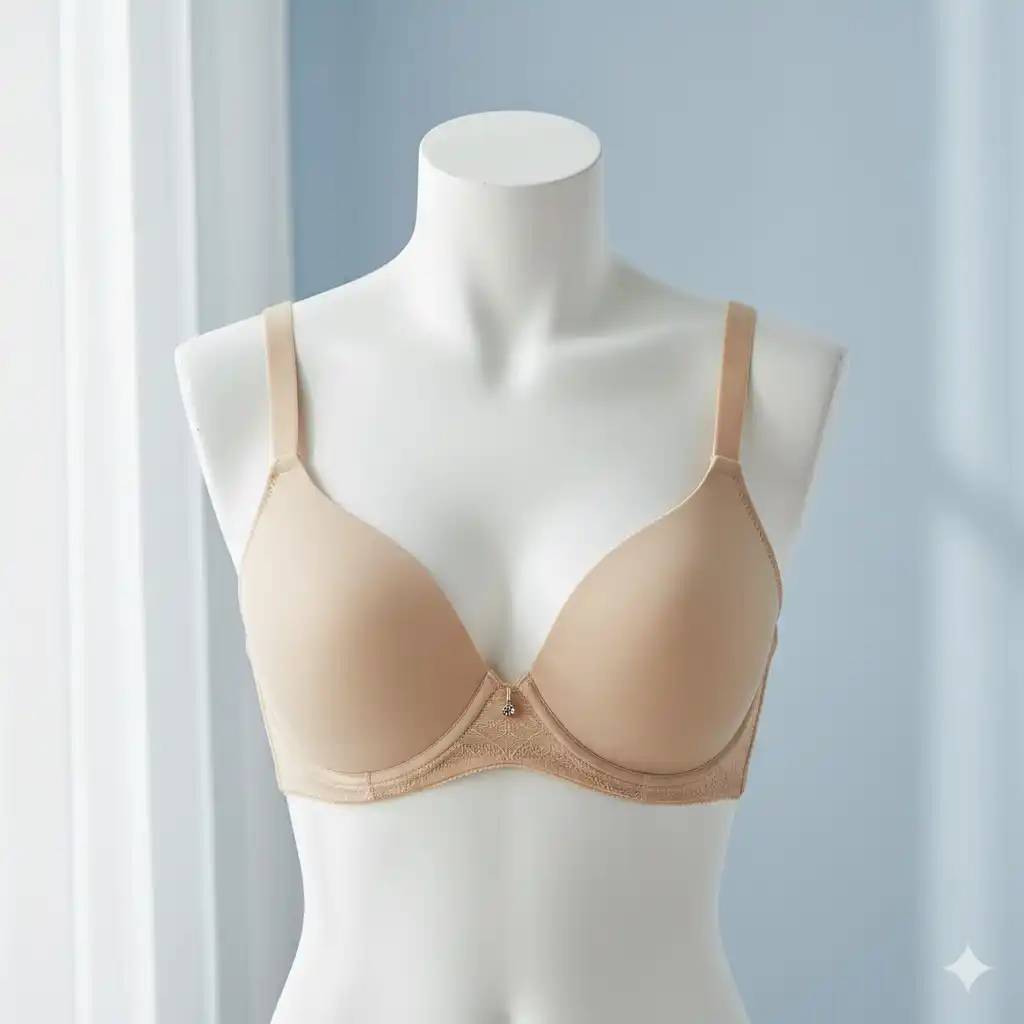
Introduction: The Size That’s Neither Too Loud Nor Too Quiet
There’s something about a C cup that doesn’t scream for attention.
It doesn’t need to.
It sits right in that mysterious middle ground — not exaggerated like a D, not understated like an A or B. Just balanced.
And that word — balance — is where the magic lies.
For years, fashion magazines, runway designers, and even Hollywood casting directors have played this unspoken game of proportion. The “ideal” body changed with every decade — from the hourglass icons of the ‘50s to the waif-thin trends of the ‘90s and the curvy revival of the 2010s.
Yet through all of it, the C cup quietly stayed timeless.
It wasn’t about excess or scarcity. It was about harmony — the kind of natural confidence that makes people look twice, not because it’s loud, but because it’s right.
And honestly, that’s what this story is about: how the C cup became fashion’s most balanced statement — without even trying.
What Exactly Is a C Cup? Let’s Start With the Basics
Okay, let’s unpack the obvious first — because for something so common, the C cup is still wildly misunderstood.
Technically, it’s just a measurement. The letter “C” represents a three-inch difference between your bust and band size. So if your underbust measures 34 inches and your bust is 37 inches, you’re roughly a 34C.
Simple, right?
Well, not really.
Because here’s the thing — a C cup doesn’t look the same on everyone.
On a petite frame, it can look full and pronounced. On a taller or broader frame, it appears modest and sculpted.
That’s why stylists call it a “chameleon size.” It adapts beautifully to whoever wears it. It molds to the person, not the perception.
“In fashion fittings, we often use C cups as our sample base,” says Marianne Lopez, senior lingerie stylist at Elle France. “It photographs well, fits evenly across sizes, and represents balance — it’s like the default canvas of femininity.”
So no, it’s not average. It’s adaptable.
The Cultural Journey of the C Cup: From the Silver Screen to Instagram
Let’s rewind a bit.
In the 1950s, Hollywood was obsessed with curves. Marilyn Monroe and Sophia Loren embodied the “bombshell” ideal — soft silhouettes, plunging necklines, and bold femininity. The C cup thrived in that era. It represented fullness without exaggeration.
Then the 1970s arrived — bohemian minimalism, free-flowing fabrics, braless liberation. Suddenly, smaller busts were in. The C cup faded from the spotlight, not unfashionable, but quietly dignified.
By the late ‘90s and early 2000s, pop culture pushed extremes again — padded bras, push-ups, and hyper-sexualized imagery. Everything was bigger, bolder, engineered. Yet the C cup didn’t go under the knife; it stayed, real and relatable.
And now? The 2020s have rewritten beauty altogether.
The C cup has become the emblem of natural beauty — the sweet spot between structure and softness. On social media, influencers and lingerie brands alike are shifting the conversation from “ideal size” to “ideal fit.”
“Women today don’t aspire to a size — they aspire to comfort and authenticity,” says Dr. Hanne Lee, body image researcher at the University of London. “And the C cup perfectly represents that evolution.”
It’s no longer about perfection. It’s about presence.
Fashion’s Love Affair with the C Cup
Let’s talk fashion — because if there’s one thing the industry loves, it’s proportion.
Stylists and designers often refer to the C cup silhouette as the golden ratio for clothing balance. It fills structured bodices elegantly, complements plunging necklines, and enhances hourglass cuts without overpowering the garment.
Here’s why designers secretly adore it:
-
Runway balance: C cups maintain aesthetic equilibrium between upper and lower body lines.
-
Fit model standard: Many global lingerie brands use 34C as their fit model baseline.
-
Universal symmetry: The size supports multiple fabric types — from rigid satin corsets to stretch lace bralettes.
Imagine a C cup under a crisp white blouse — subtle contour, no strain on buttons, no excess padding. Just clean lines. Effortless sophistication.
It’s the kind of proportion fashion photographers dream about.
The Psychology Behind the C Cup: Why “Balance” Feels So Beautiful
Here’s where things get interesting.
Why does the C cup feel aesthetically right to so many people?
It’s not arbitrary — it’s biological and psychological.
Studies in human symmetry (yes, there’s actual research on this) suggest that people subconsciously perceive balance as beauty. A C cup tends to align closely with body symmetry — not dominating the torso, not disappearing in proportion.
It’s the visual rhythm of the body — steady, natural, easy on the eyes.
And maybe that’s why women who wear C cups often describe it as the most “wearable” size. Clothes sit better. Movement feels freer. There’s confidence in not having to adjust or compensate.
“I’ve styled women of every shape,” says celebrity stylist Nadine Chen. “But C cup clients often radiate this quiet self-assurance. They don’t perform their beauty — they inhabit it.”
The Confidence Factor: When Fit Becomes Empowerment
Confidence is never just about the mirror. It’s about how you feel inside your clothes — and the C cup often strikes that perfect middle ground.
It’s not a struggle to support. It’s not an effort to flaunt. It’s just right.
Many women say they feel the most themselves at this size — comfortable, mobile, and confident without constant adjustment or concealment.
And in a world obsessed with extremes, that kind of neutrality is quietly revolutionary.
Because here’s the thing — fashion isn’t only about what’s seen. It’s about what’s felt. The C cup allows you to forget about your body and simply exist in your style. That’s freedom disguised as simplicity.
How the C Cup Shapes Fashion Trends
Walk into any lingerie store, and you’ll notice something: most display bras are C cups.
That’s not coincidence — it’s marketing meets design practicality.
A 34C fits mannequins easily. It displays natural cleavage without distorting shape. It looks realistic across most demographics.
And in ready-to-wear fashion, the C cup silhouette dictates everything from dart placement to neckline depth. Designers sketch garments with proportional bustlines that mirror C cup geometry because it sells the idea of accessibility — a size that’s achievable, relatable, desirable.
“When we cut dresses, we think about drape over the chest,” says Ravi Koh, pattern master for an Italian luxury label. “C cups make fabrics behave. They create tension where we want it and release where it flatters.”
So while fashion may never say it outright — the C cup secretly drives design language.
Global Perception: How the C Cup Differs Across Cultures
The meaning of a C cup changes with geography.
In Japan, it’s considered generous. In France, it’s classically feminine. In the U.S., it’s often seen as “average.”
But that word — average — is misleading.
Because “average” doesn’t mean ordinary. It means representative. The C cup reflects the global median of proportion, not the stereotype of mediocrity.
It’s the anchor point — the middle ground where beauty ideals meet realism.
Fashion editors in Europe often describe it as “the Paris size.” In a culture that worships moderation, the C cup aligns with the French philosophy of balance — never too much, never too little.
And perhaps that’s why French lingerie brands design primarily around C cup molds — it’s their aesthetic sweet spot.
Media Influence: The Pop Culture Paradox of the C Cup
Media hasn’t always been kind to nuance.
When you think of screen icons — Pamela Anderson, Megan Fox, or Jennifer Lawrence — each represented a different cultural ideal of femininity. Yet, look closely at most fashion campaigns, and you’ll notice something striking: the majority of lingerie models fall within the C cup range.
It’s the size that sells aspiration without intimidation.
Social media has further softened the lens. Influencers like Iskra Lawrence and Ashley Graham champion body diversity, helping women realize that fit matters more than fame.
And while the algorithm once rewarded exaggeration, the pendulum is swinging back to authenticity.
The C cup — that grounded middle — is suddenly the new luxury.
Fashion Tips for Dressing the C Cup Figure
Here’s where style meets practicality. If you’ve got a C cup, these insights can help you elevate your look:
-
V-Necks are your secret weapon. They elongate the neckline and enhance natural proportion.
-
Structured fabrics work wonders. Think tailored blazers, wrap dresses, and satin tops — they sculpt without clinging.
-
Layer wisely. Soft cardigans or lightweight jackets keep focus balanced.
-
Invest in well-fitted bras. A perfect fit can change your entire outfit’s architecture.
-
Skip over-padding. You already have natural curvature; embrace it.
Because fashion isn’t about hiding or exaggerating — it’s about revealing yourself at your best balance point.
The Future of Body Perception: Where the C Cup Fits In
The fashion world is shifting — slowly, but surely.
Inclusivity, body neutrality, and self-expression are replacing size obsession. And within this cultural pivot, the C cup’s role is transforming too.
It’s no longer the standard — it’s the bridge.
A symbol of harmony between small and large, comfort and confidence, subtlety and power. It represents a middle that’s finally being celebrated, not overlooked.
And maybe that’s the real story here — not that the C cup is perfect, but that perfection never mattered in the first place.
Conclusion: The C Cup as a Metaphor for Modern Femininity
If you strip away the numbers, the letters, the labels — the C cup becomes something else entirely.
It’s balance.
It’s beauty without bravado.
It’s a quiet kind of confidence.
The kind that doesn’t need to prove itself because it already knows its worth.
So the next time you hear someone call a C cup “average,” smile. Because maybe, just maybe, that’s what makes it extraordinary. speromagazinehub.com
FAQs About C Cup
1. Is a C cup considered big or small?
It’s in the middle — moderate on most body types, fuller on petite frames.
2. Why is the C cup often used in fashion fittings?
It provides ideal visual symmetry, making it the go-to sample size for designers.
3. Do C cup bras look different across brands?
Yes. Fabrics, padding, and underwire placement vary, so fit may differ slightly.
4. What makes the C cup so popular?
Its natural proportion and versatility in clothing styles.
5. Is a C cup the most common bra size?
In many Western countries, yes — especially among women aged 20–40.
6. What’s the difference between 34C and 36B?
Cup volume is similar, but band size differs. 36B fits a broader frame.
7. Can the same C cup look different on two people?
Absolutely. Frame size and height affect visual fullness.
8. How does a C cup impact outfit choice?
It allows versatility — from fitted tops to plunging dresses — without needing alteration.
9. Is the C cup ideal for every woman?
There’s no “ideal” size — comfort and confidence matter most.
10. Why do people call it the balanced cup?
Because it naturally aligns with human proportions and visual symmetry.